english italiano
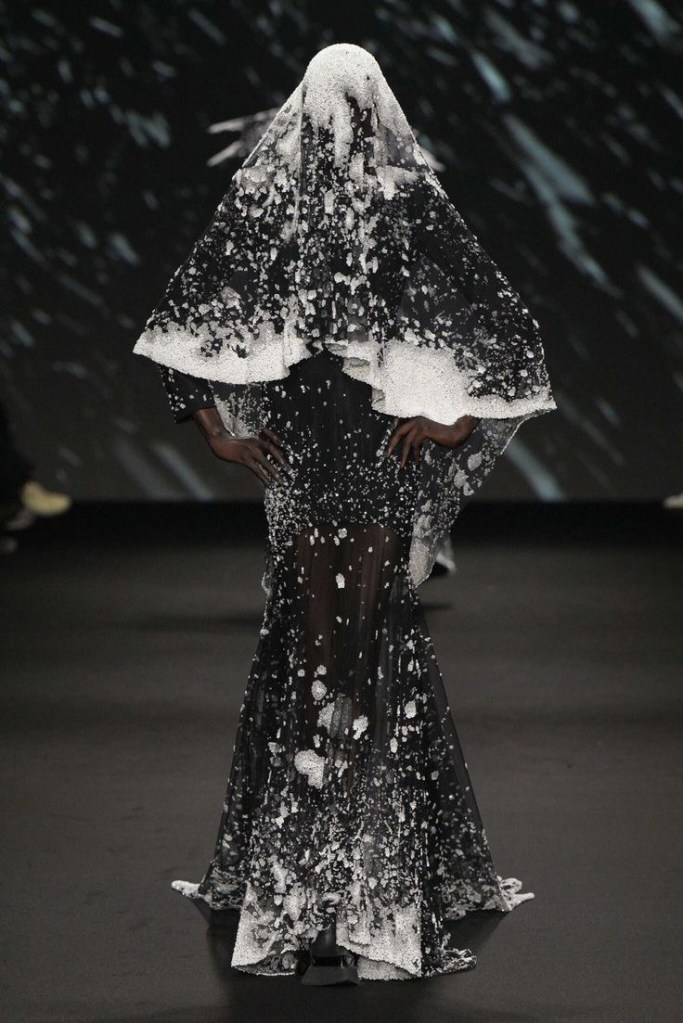
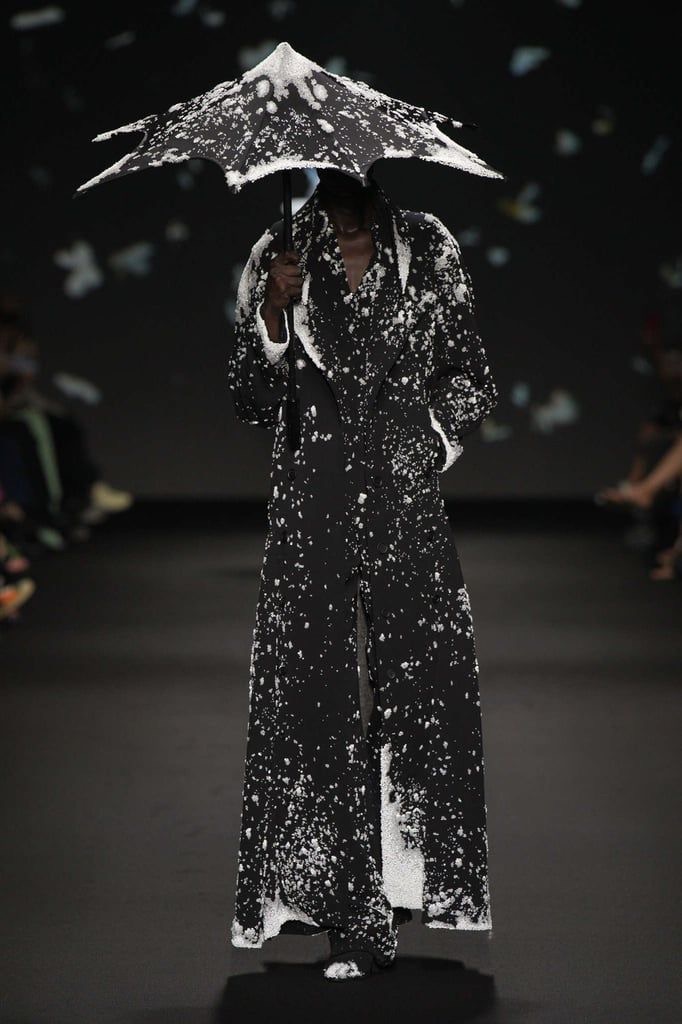
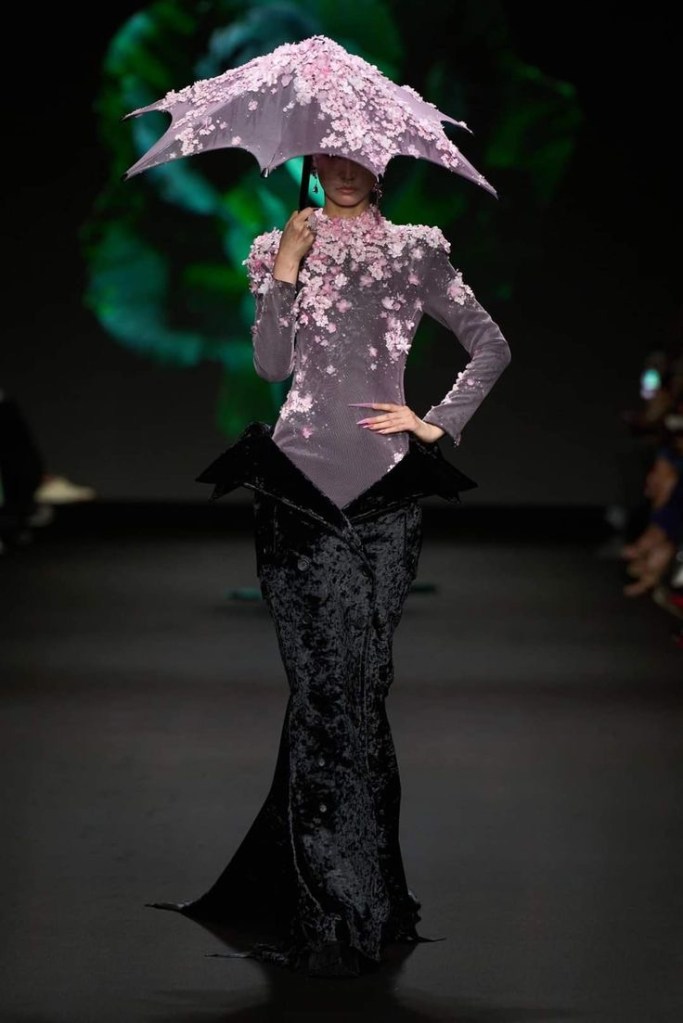
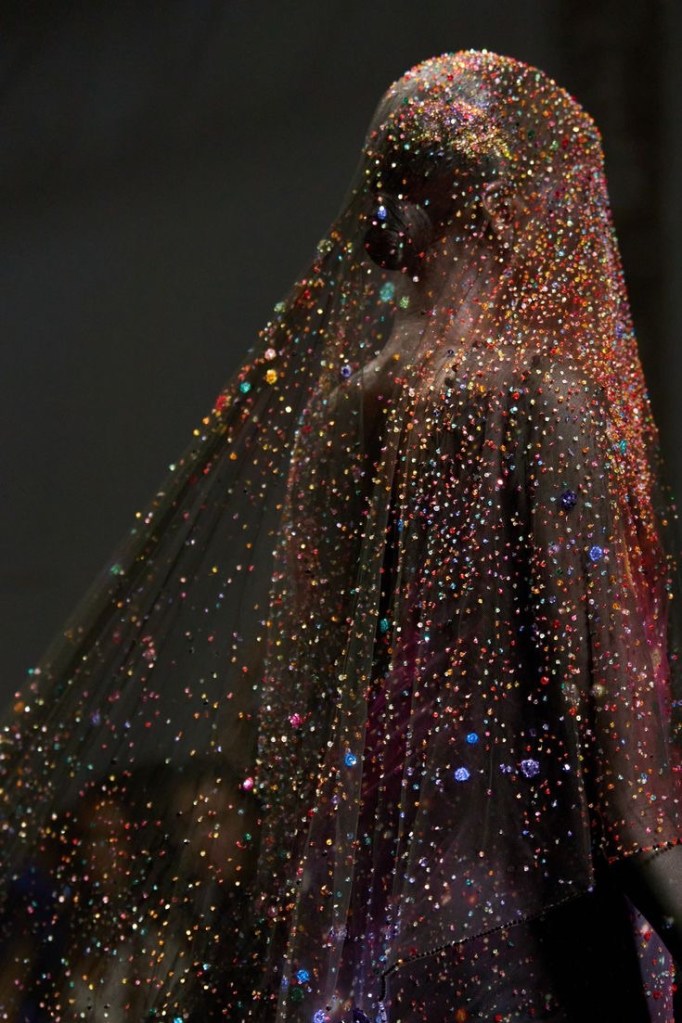
Drappeggi e mantelli neri punteggiati di fiocchi di neve, silhouette sgargianti alternate a tessuti essenziali inondati di fiori di ciliegio. Cappotti color pastello cosparsi di farfalle e abiti dalle foglie vivaci. Strati setosi di tessuto color pelle, una guaina rosso sangue ricoperta di perline. Manichini scheletrici e strati di tulle cosmico ricamati con galassie di minuscoli cristalli multicolore, scintillanti nella penombra. Se vi chiedessero di descrivere l’essenza della vita e del tempo, vi accorgereste che c’è poco a cui pensare al di là dell’intrigante spettacolo proposto sotto i riflettori da Robert Wun.
Lo stilista cinese ha celebrato il decimo anniversario del suo brand con una sfilata di haute couture intitolata “Time“. Nato a Hong Kong, il creativo si è trasferito a Londra dove ha studiato al London College of Fashion. Si è laureato nel 2012 e ha lanciato l’omonimo brand di moda nel 2014. Il marchio ha fatto il suo debutto in passerella a Parigi, nel gennaio 2023, con il supporto di Bruno Pavlovsky di CHANEL. Wun è diventato il primo stilista di Hong Kong a partecipare al calendario dell’Alta Moda nella storia, come membro ospite della Fédération de la Haute Couture et de la Mode. Ha dichiarato che l’obiettivo della collezione era quello di riflettere sul “perché faccio moda, e cosa significa il tempo?“. La risposta che ha trovato è piuttosto semplice ma innegabilmente profonda. “Accettare che un giorno tutto finisca – e che va bene così“.
Riferisce perciò a Vogue: “Dire che dobbiamo vivere il momento è un cliché, ma davvero quel che fai lo puoi fare una sola volta, quindi è meglio goderselo a prescindere dal successo o dal fallimento“.
E per tradurre il concetto del trascorrere temporale in abiti veri e propri, Wun ha immaginato di ritrarre la progressione delle stagioni.
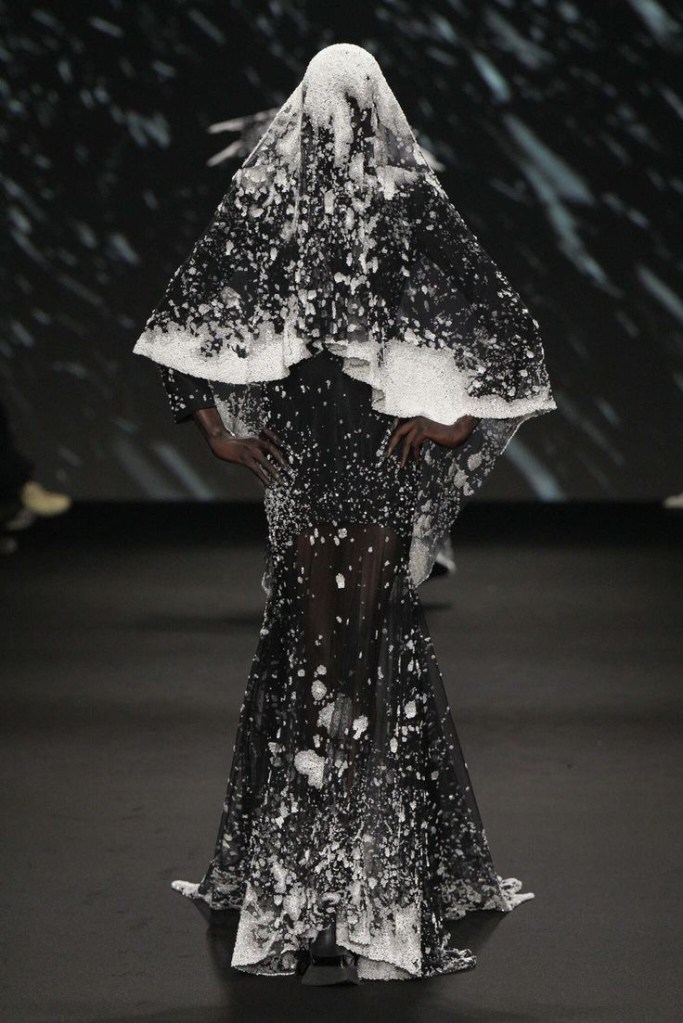
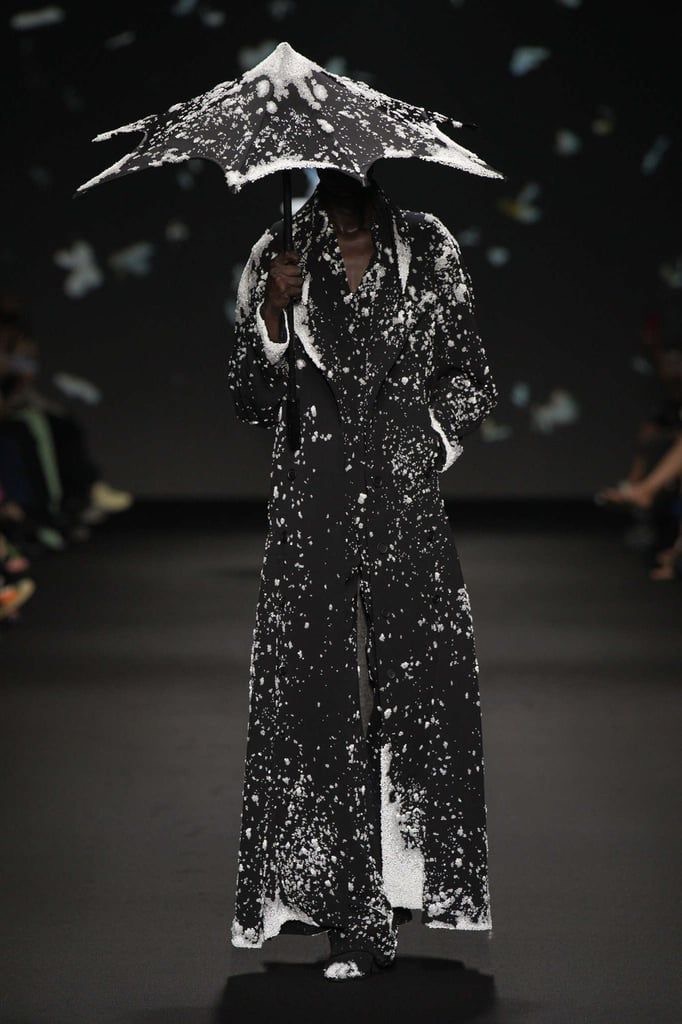
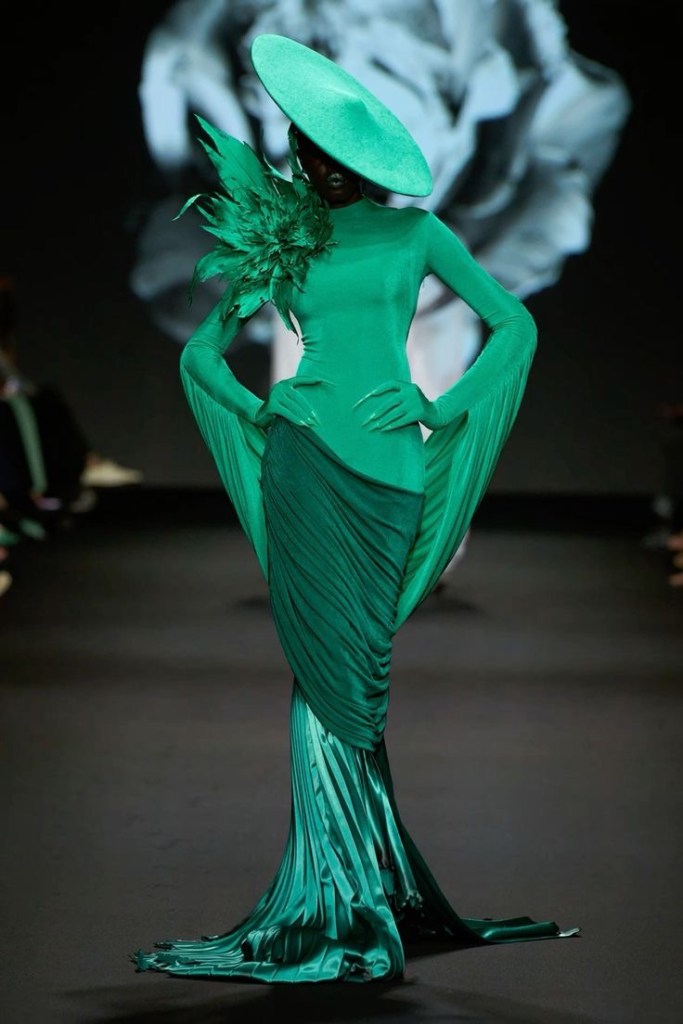
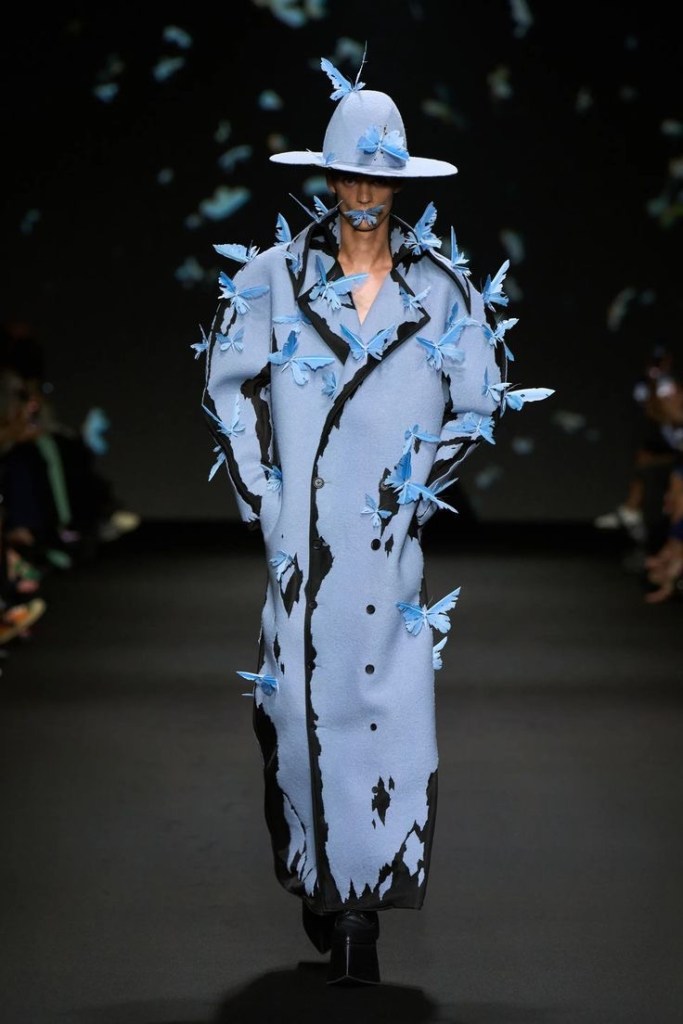

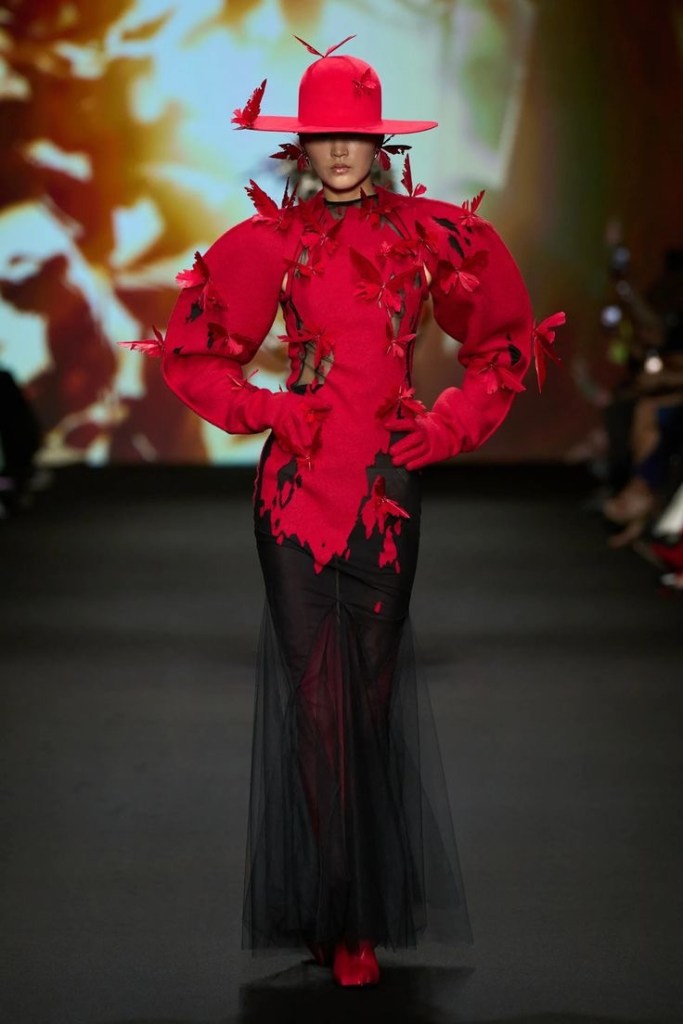

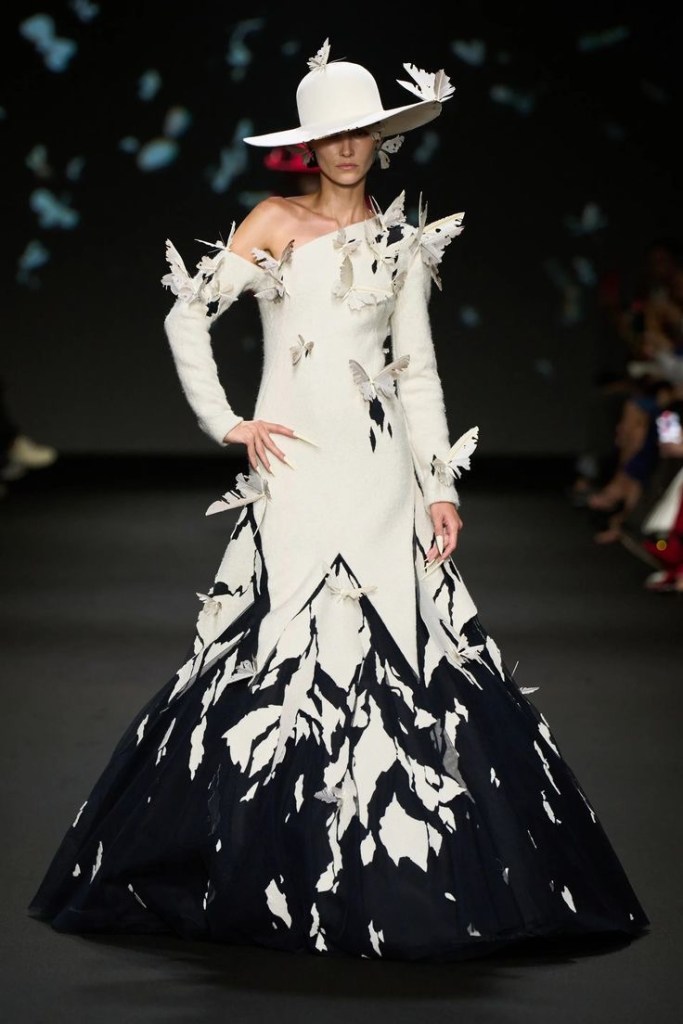
La sfilata si è aperta con l’inverno, un periodo che rende le persone più riflessive, secondo il creatore della collezione. Un abito nero con un velo abbinato ricamato in cristalli, raffigurante la prima neve che cade, si muove elegantemente tra le ombre della sala. L’effetto è stato ripreso anche attraverso la stesura di uno strato di candore su un sottile mantello che sembrava essere stato fatto a pezzi e poi ricucito, evocando la tecnica del kintsugi. Questa espressione, kintsugi, si riferisce all’arte giapponese di ricomporre i frammenti di ceramica rotti con l’oro, una metafora per invitare ad abbracciare i pezzi rotti di noi stessi come parte indispensabile dell’esperienza umana. E chiaramente, le crepe riparate della ceramica rappresentano il processo di guarigione che conferisce valore al risultato finale, anziché sminuirlo.
“Nella filosofia cinese, i fiori sono belli perché non sono destinati a restare per sempre. Se fiorissero in eterno la gente non troverebbe in loro la stessa bellezza“, spiega Wun.
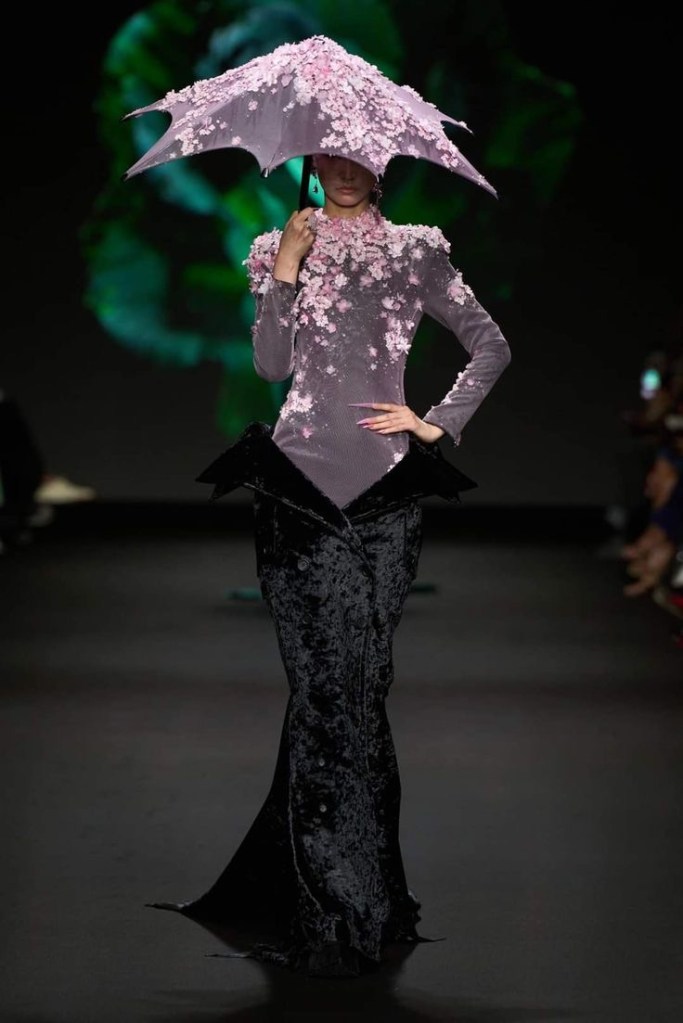
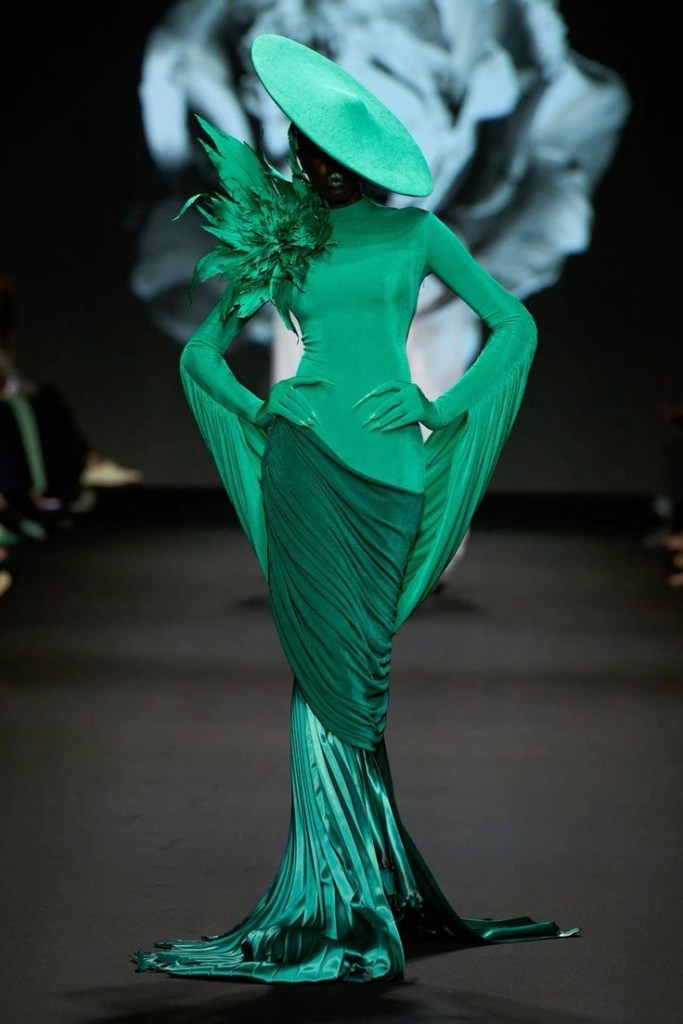
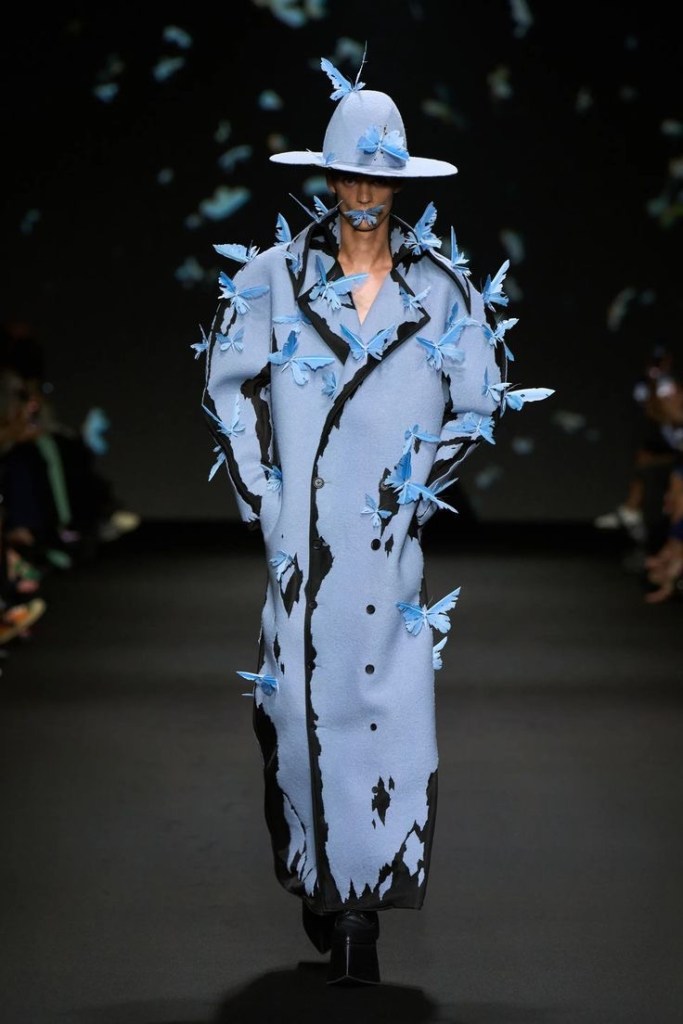
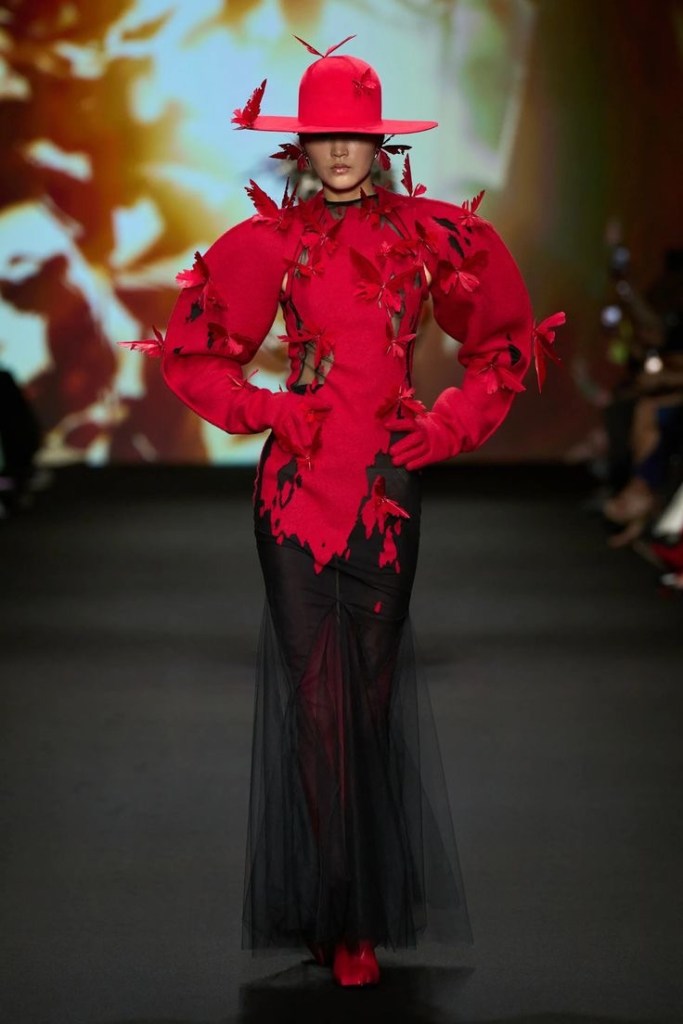
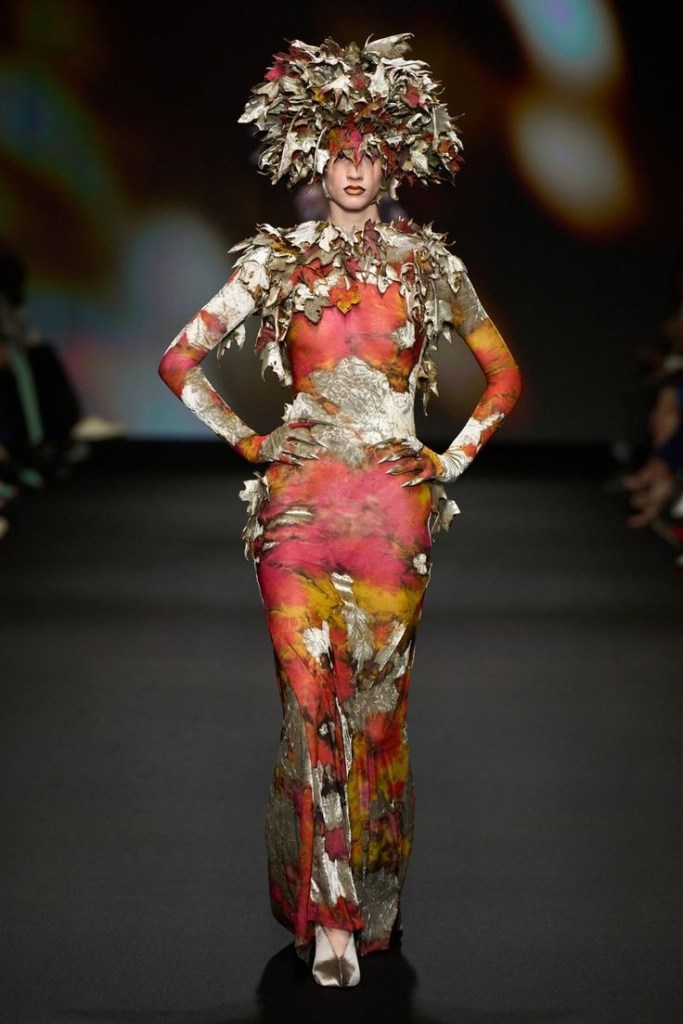
Per questo motivo, i fiori e le farfalle protagonisti delle stagioni più calde sono stati raffigurati nella loro decadenza piuttosto che nella loro gloria, poiché è nella loro vanitas che risiede la bellezza. E così, la primavera e l’estate non vanno immaginate come schizzi sfavillanti di colore su un cielo azzurro, piuttosto come timidi ma saggi tratti di matita su uno sfondo di inevitabilità. Pieno di speranza, ma anche al contempo così nostalgico. L’erosione del tempo su ogni essere vivente è stata resa tecnicamente da bruciature ripetute con convinzione nel corso della collezione. Il team ha scansionato i segni del fuoco su un pezzo di organza, l’ha poi stampato su seta ed effettuato ulteriori bruciature sui bordi per enfatizzarne l’effetto. Infine, abiti dal colore rosso vivo e tappeti di foglie tracciano la conclusione del ciclo delineato portando con sé la meraviglia dell’autunno, su uno sfondo che ne renda giustizia, dal suo immaginario suggestivo.
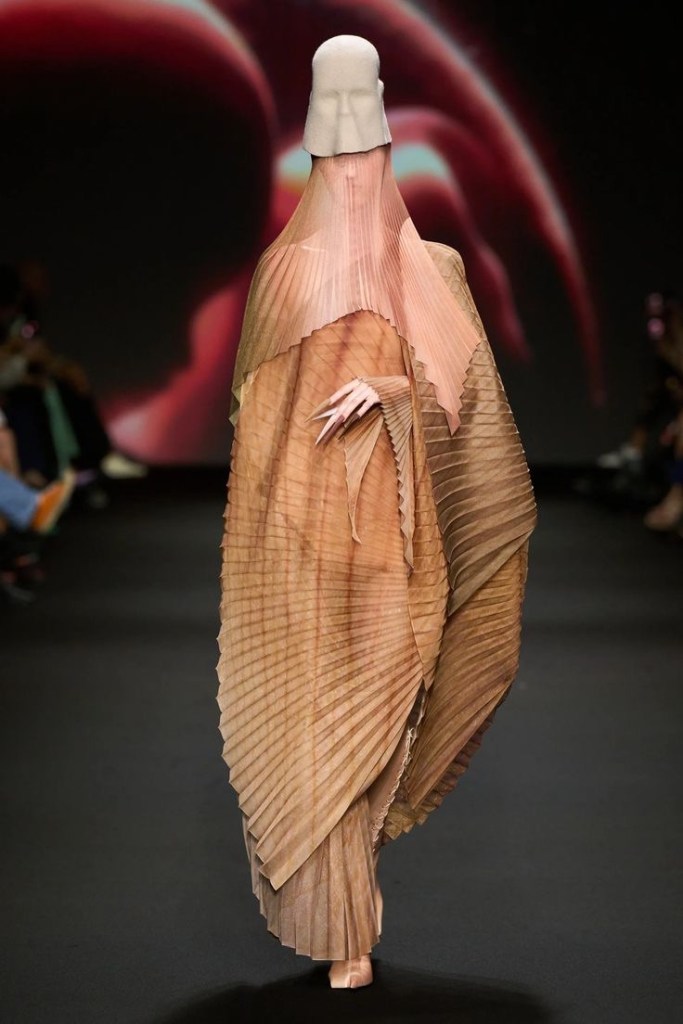
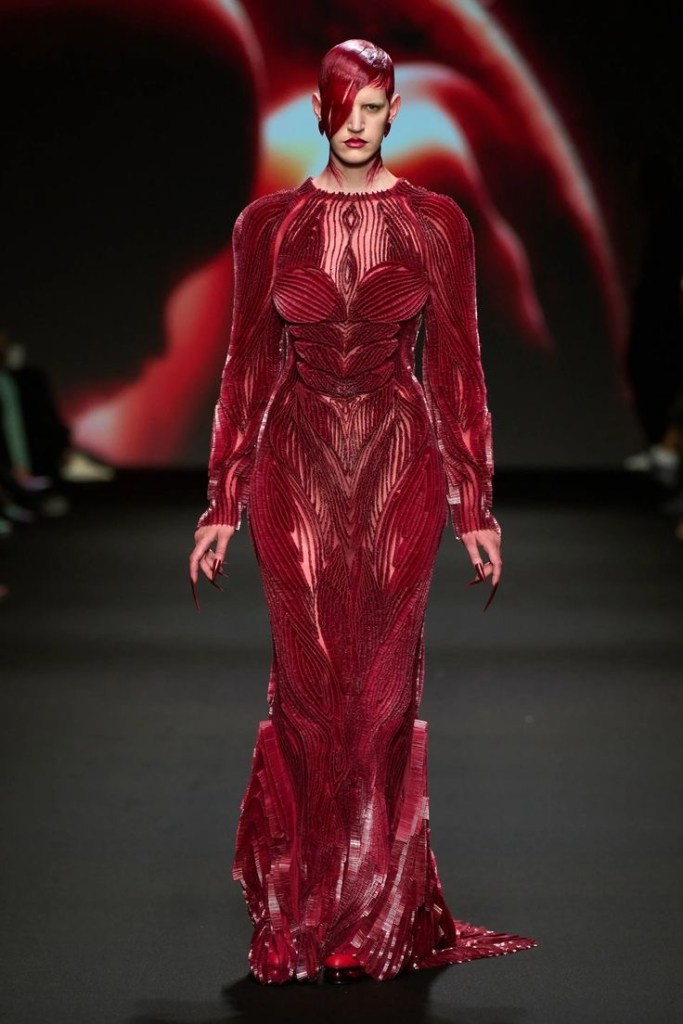
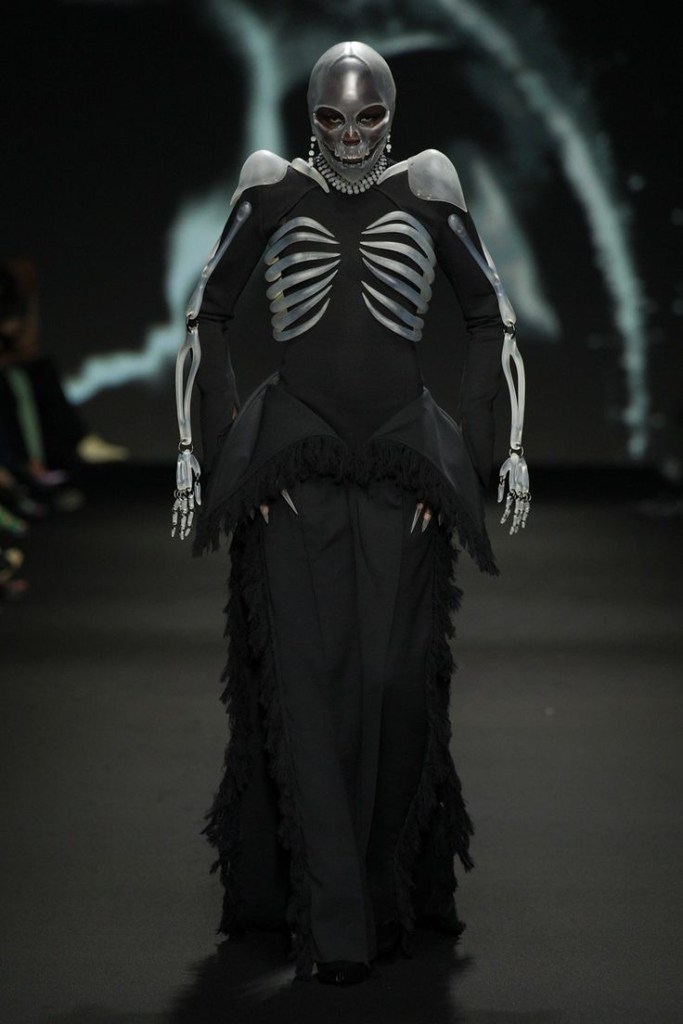
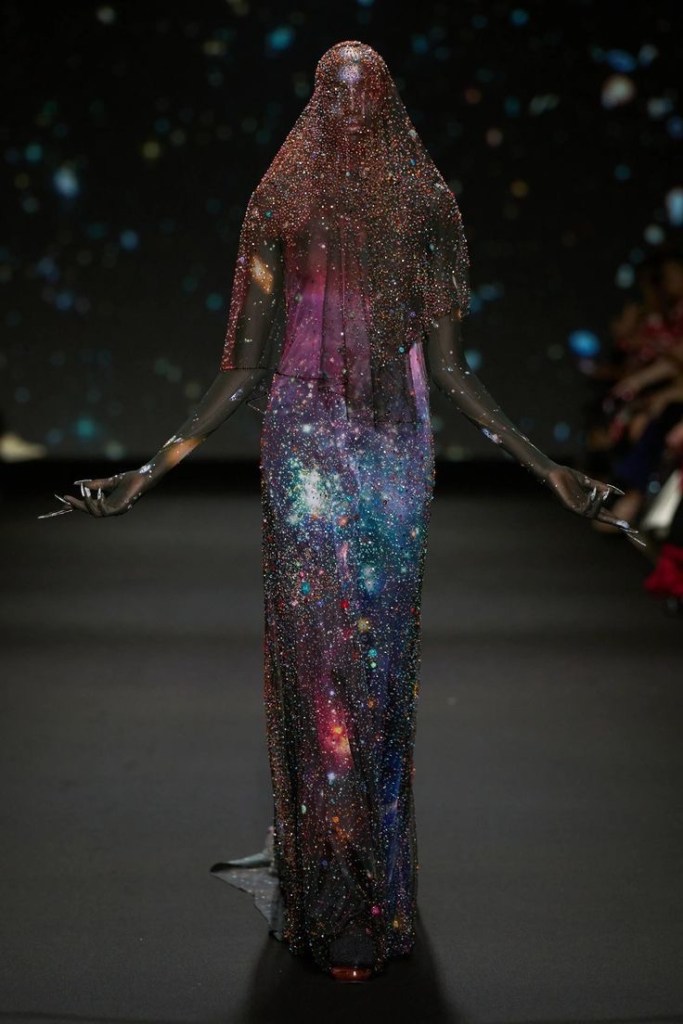
Tuttavia, la storia non è finita qui. Nella narrazione del tempo che scorre, i quattro look finali rappresentano i quattro strati del corpo umano. Pelle, carne, ossa e anima.
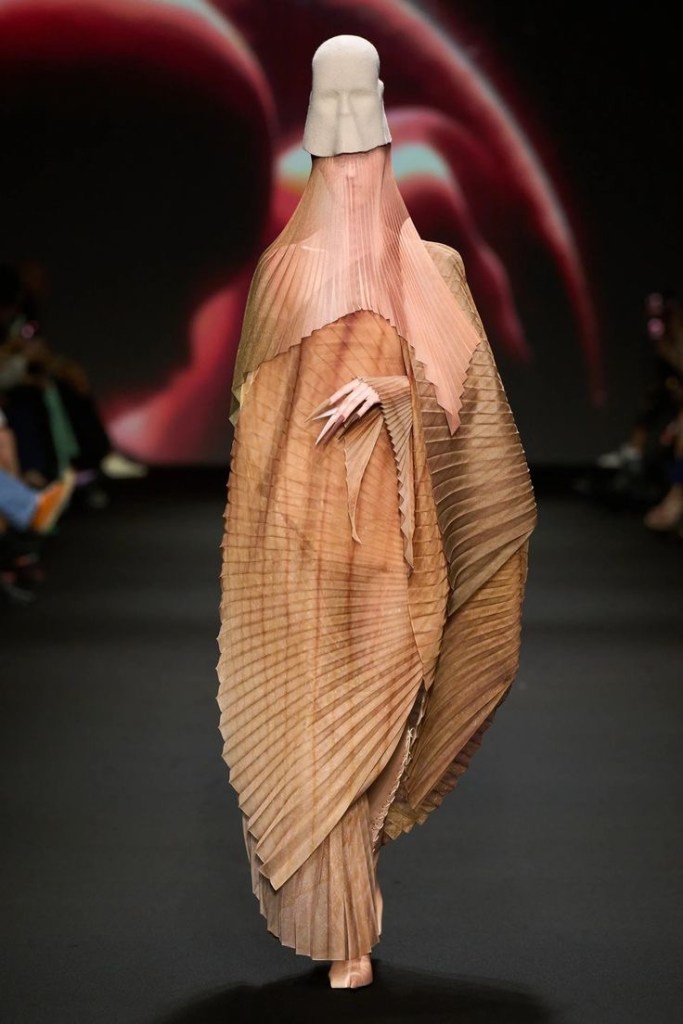
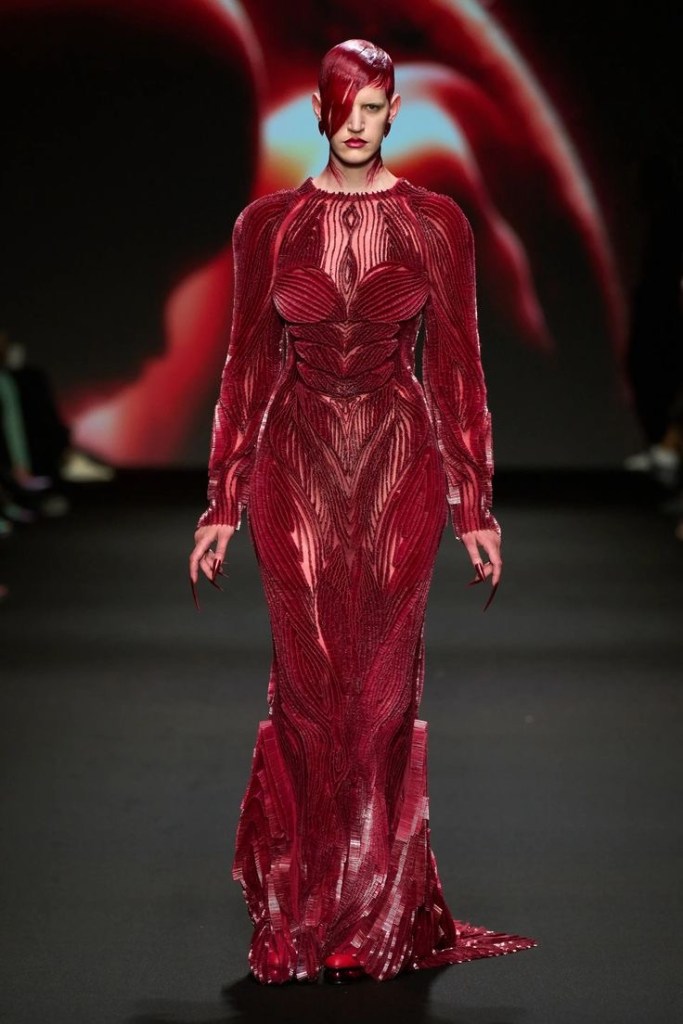
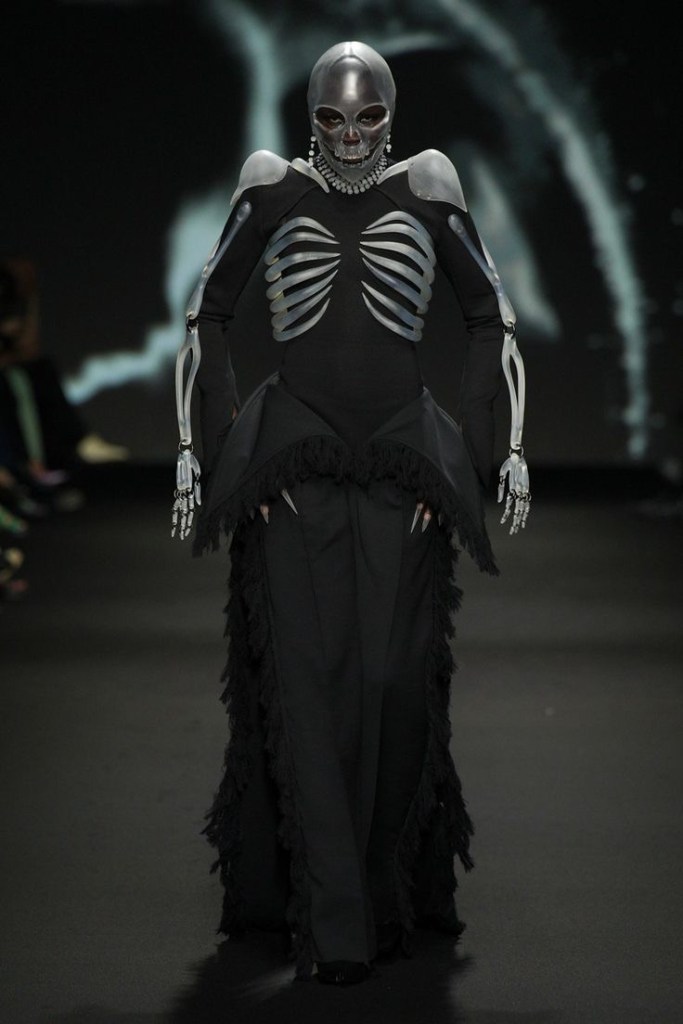
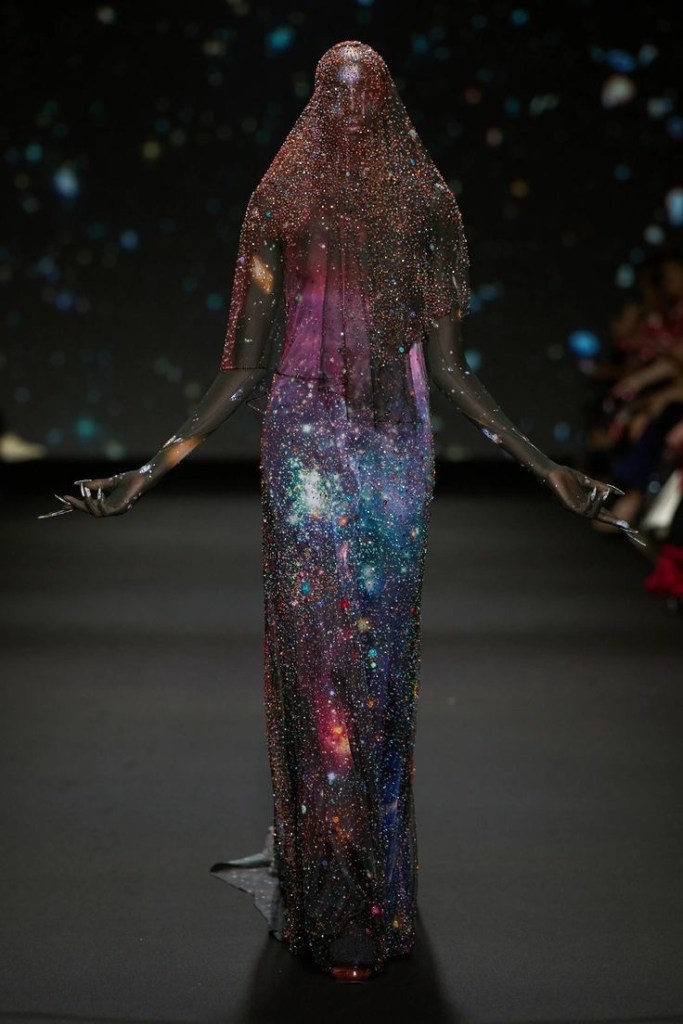
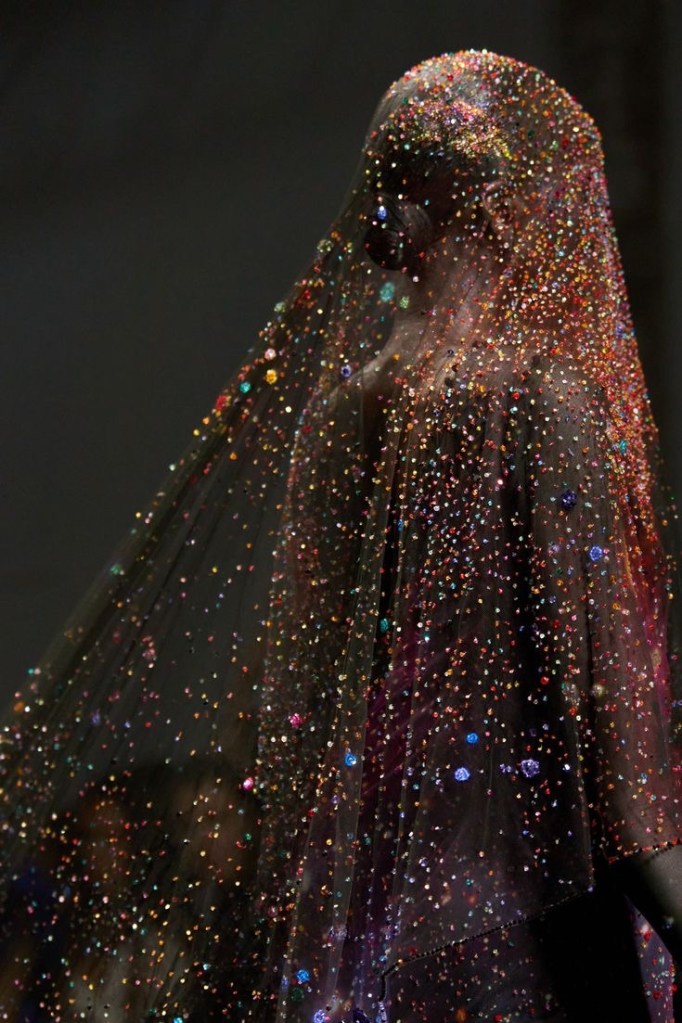
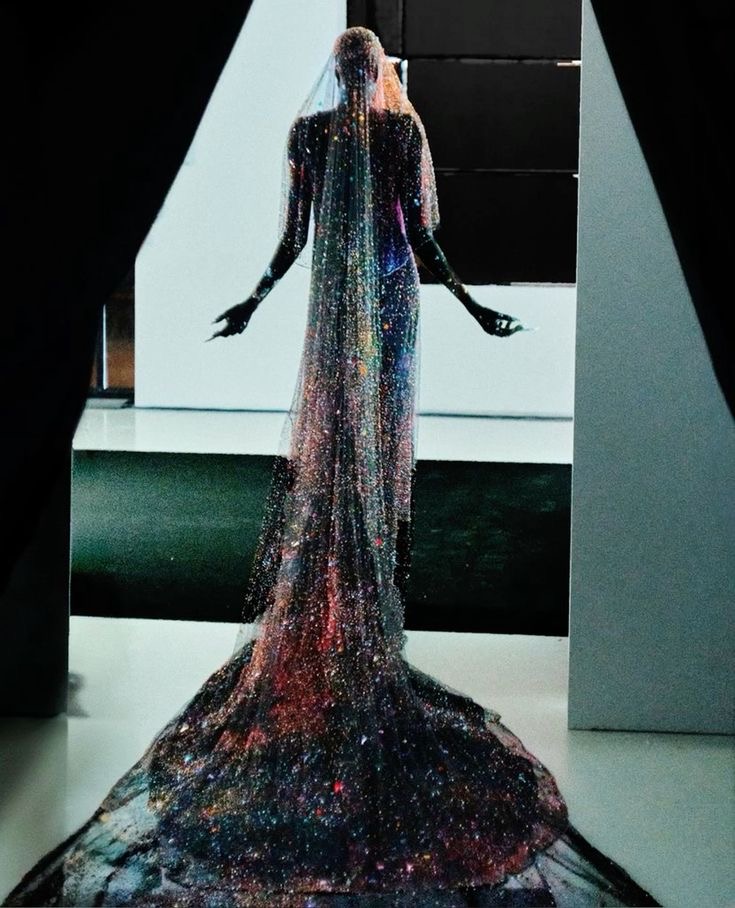
La pelle viene concretizzata da un abito a bozzolo multistrato, realizzato con sei tonalità di plissé color carne, un cappello di velluto modellato sul viso e stivali con taglio a spirale in pelle stampata. La carne si mostra come una sottile guaina rosso sangue ricoperta da 68500 perle cucite in posizione verticale. Il vestito era apparentemente così pesante (40 chili) da non poter essere nemmeno appeso. Una forma scultorea traslucida con una maschera a casco, indossata con una tuta sartoriale in misto lana e seta, resta sormontata da un manichino scheletrico in impetuoso movimento ad ogni passo. Le ossa rappresentano “una riflessione sul desiderio di immortalità e sull’inevitabile mortalità“. Per concludere, un abito velato e strascicato in grado di richiamare la visione di una miriade di costellazioni ha chiuso la sfilata. Ricamato con 97.000 cristalli Swarovski per un totale di 1430 ore di lavoro manuale, il look di chiusura indiscutibilmente riporta all’intenzione progettuale di una ricreazione della Via Lattea. Dopo aver spogliato la dimensione fisica del corpo e aver assaporato la paradossale meraviglia dell’effimerità della dimensione tangibile, Wun ci conduce verso la magia dell’astrazione spirituale, impartendo un’ultima lezione.
Tutto è destinato a perire, tranne l’anima. Perché essa appartiene all’universo e lì ritorna.
 A fashion hypothesis