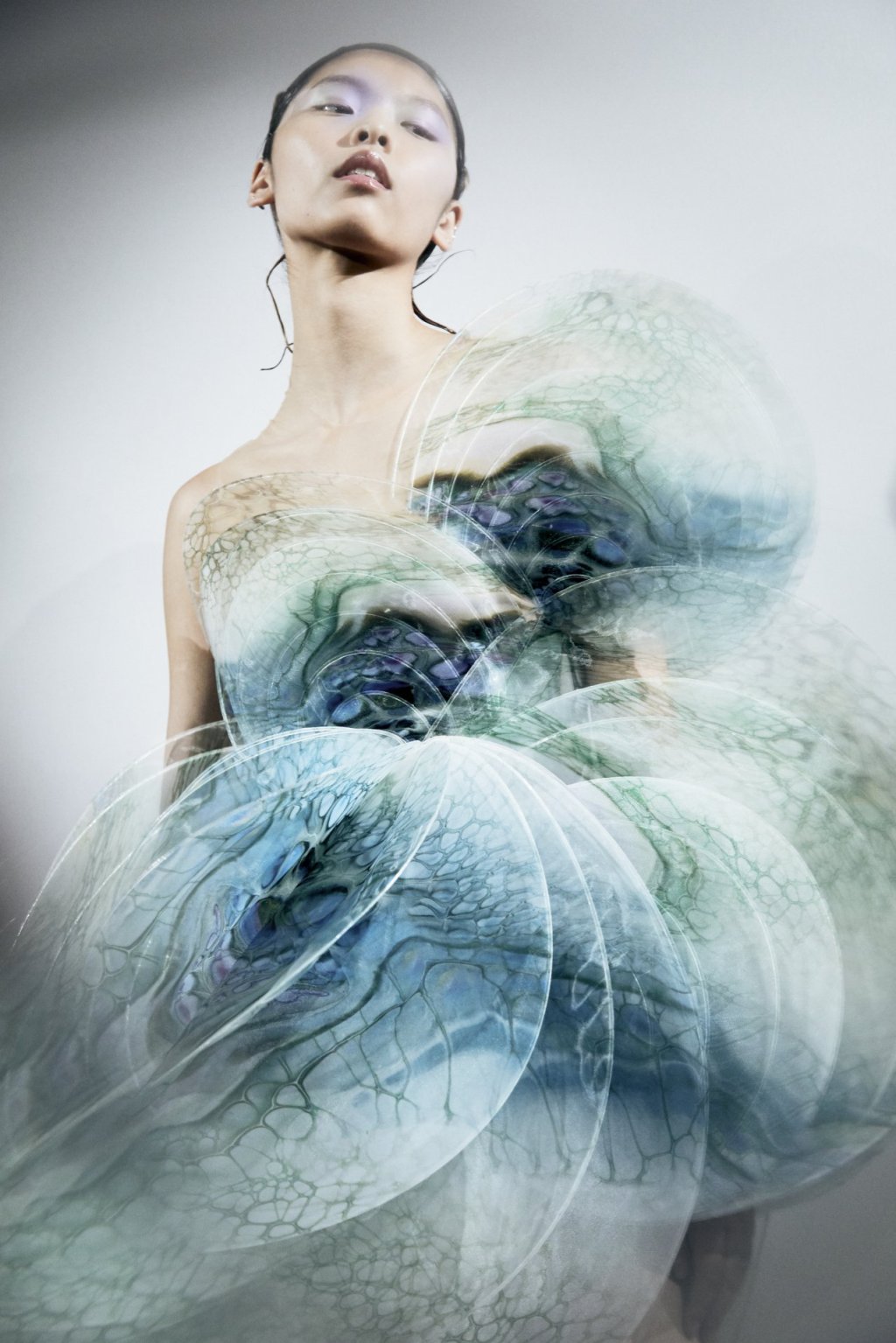
From laser cut to 3-D printing, or electromagnetic weaving, embracing silicone and metals. Ever wondered what would happen if high tech and science collided with fashion? Dutch fashion designer Iris van Herpen most definitely did. Incorporating inspiration from chemistry, physics, biology and paleontology, the idea that fashion would be moved by nature is taken to another level. “Fashion is an instrument for change, to shift us emotionally. Through biomimicry I look at the forces behind the forms in nature, these patterns and natural cycles are my guide to explore new forms of femininity for a more conscious and sustainable fashion for the future”.
Let’s explore her universe, studded with innovation and research.
Creative roots
With no academic background in tech or science, the creative has been a pioneer in transforming couture, improving her work through collaborations with specialists and meticulous study. Recalling a 2014 trip to CERN, she states that admiring the Large Hadron Collider reached her in a new way. The particle accelerator, embedded in a tunnel, exerts a magnetic field about a hundred thousand times stronger than that of Earth. Innumerable magnets and electronic devices are linked together with color-coded wiring and brightly painted metal structures. It struck her as the most beautiful thing she had ever seen. She told the New Yorker that “it was so overwhelming that people could have made it, the complexity, and the simplicity, of it. The construction looks like a big puzzle, like a big Lego. It is very simple in materiality, but what it researches is so complex”, describing it as simply “mesmerizing”.
Magnetic Motion
The following year, she collected some information to give birth to her new collection titled Magnetic Motion, made from laser-cut acrylic mesh, placed around the wearer’s body in evocation of a force field. For the same collection she collaborated with Dutch designer Jólan van der Wiel, with whom she designed shoes made from resin mixed with iron filings; while the material was still in molten form, it was subjected to magnetic forces that distorted its surface, immersing the matter in its own concept.
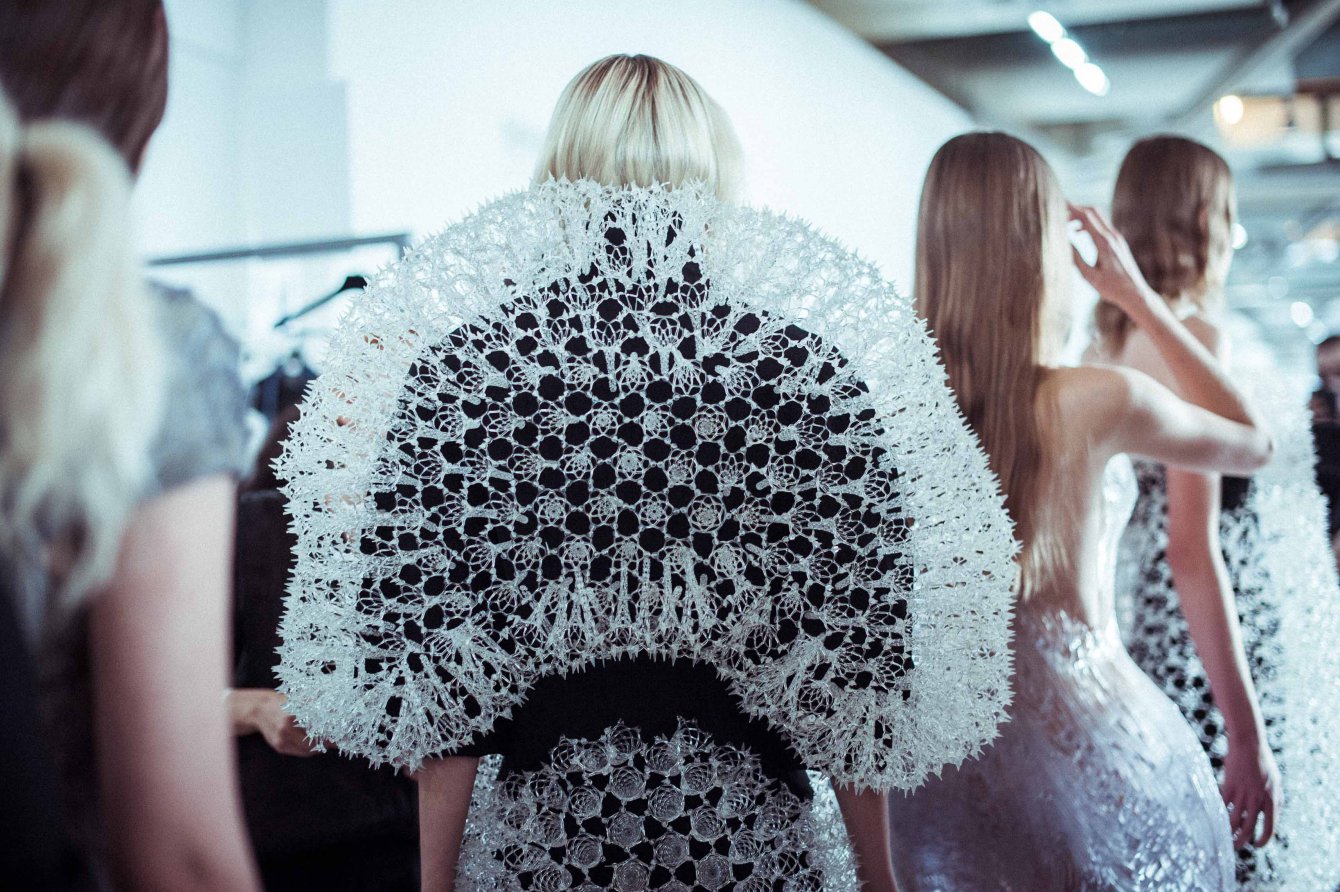
And here we are now. In her last collections, a variety of abstractions are developed with such grace and maniacal detail at the same time. Featuring notions from different disciplines, and with multilevel inspiration from brilliant minds, the following examples (presented out of chronological order, with the exception of the final two paragraphs on the AW24 and AW25 collections) can give an idea of what we are talking about.
Sensory Seas
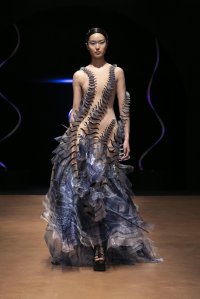
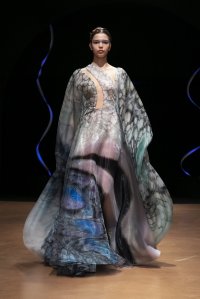
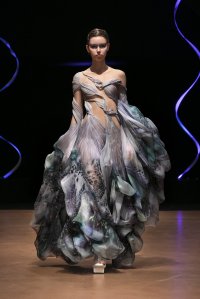
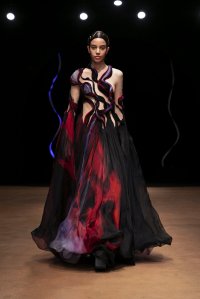
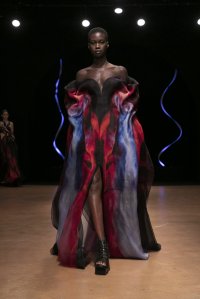
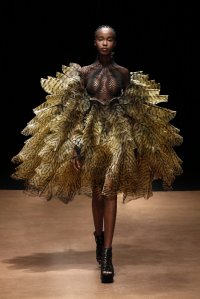
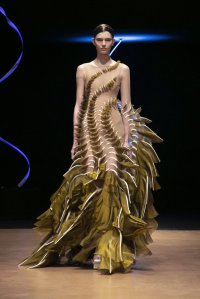
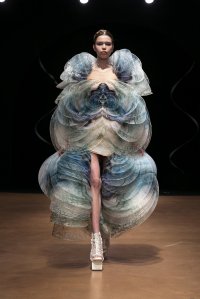
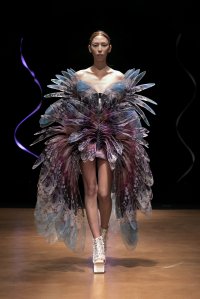
Firstly, the Sensory Seas collection. Imagine holding up a mirror and looking through your own mind’s synapses. Then, looking more in depth, finding a glimpse of the fibrous marine ecology of our oceans. Spanish neuroanatomist Ramón y Cajal is the muse of this project. Cajal, considered the father of modern neuroscience, made discoveries during the last dozen years of the 19th century that were going to change the way we study and think of the brain forever. His theory, immediately accepted by most, but not specifically proven until the 1950s, was that neurons stay in touch without touching. They communicate across infinitesimal gaps defined as synaptic clefts.
Exploring our central nervous system in microscopic detailing, Cajal documented his revolutionary findings through anatomical drawings that are considered amongst the world’s greatest scientific illustrations. Merging science with art, he brought to life the threads of our enchanted biology in small notebook renderings with shifting combinations of ink and graphite. Results may hypnotize. The association is clear at first sight: there’s an invisible string connecting the structure of our mind, the one of a tree or that of a marine organism.
“Sensory Seas holds a microscope over the indelible nuances between the anthropology of a marine organism, to the role of dendrites and synapses delivering infinite signals throughout our bodies. It enchants the attention of how two processes of torrential messaging exist in an uninterrupted state of flux”
(from Iris Van Herpen’s official description).
Syntopia
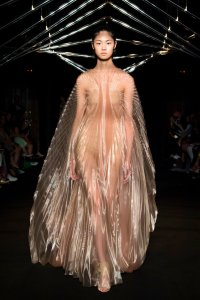
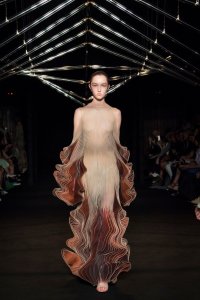
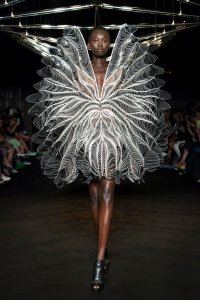
The second collection we would like to present to you highlights the designer’s masterly aware perception of space. The collaborators for this project are Lonneke Gordijn and Ralph Nauta of Studio Drift, who specialize in choreographed sculptures and kinetic installations, aiming to re-establish the connection between humans and earth. For the show, Studio Drift created a spatial kinetic installation In 20 steps, consisting in 20 delicate glass wings that represent all the different stages of flying in an absolutely artistic and abstract manner.
“The vivacious glass bird flows in symbiosis with the models while they move over the runway, their delicate interaction emphasizes the fragility of new worlds living and soaring together”.
What’s curious about it is how this whole dedication merged with a fundamental biographical passage:
“as a former dancer, the transformation within movement has hypnotized me. For this collection I looked closely at the minutiae of bird flight and the intricate echoing forms within avian motion”,
says Van Herpen.
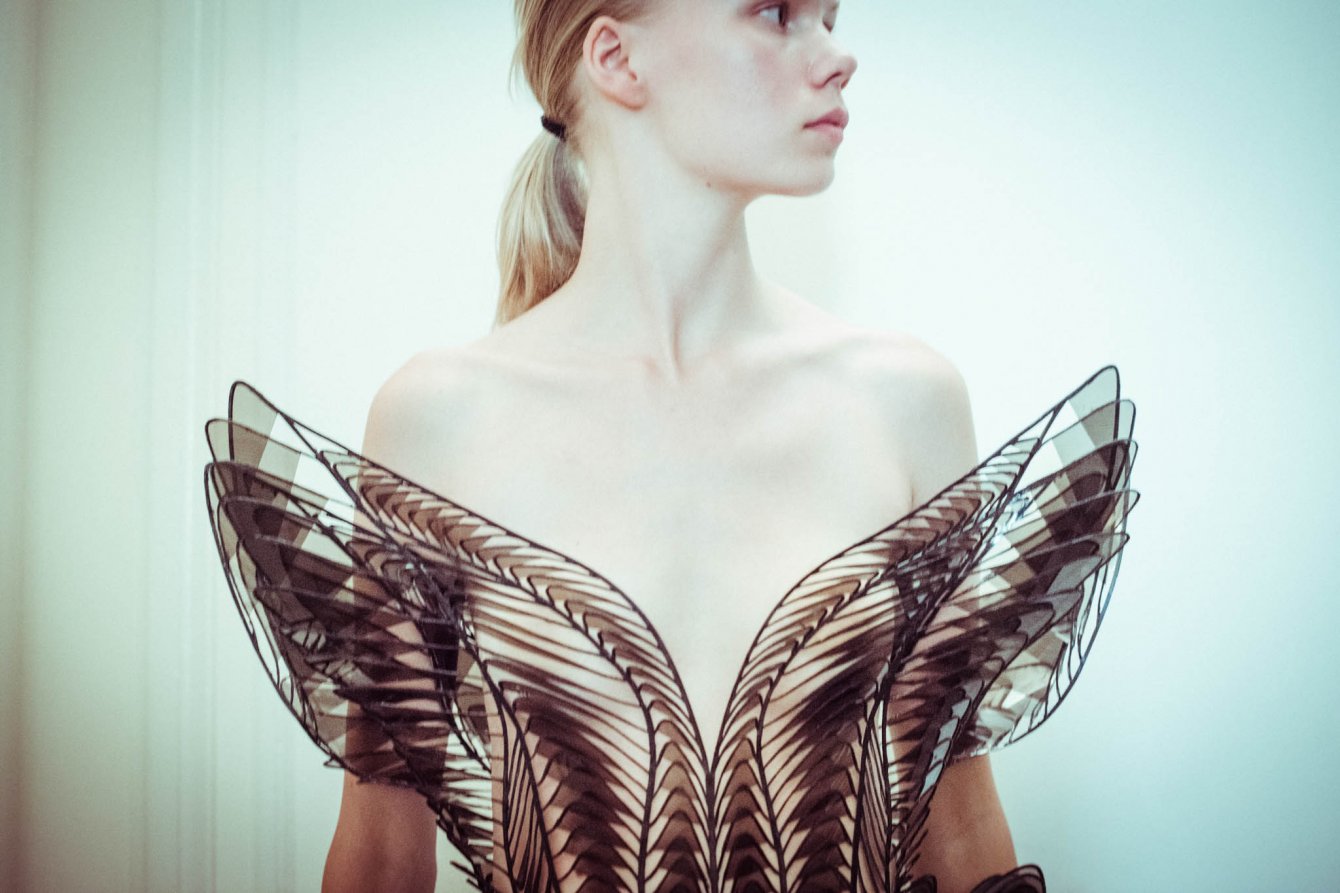
As for how to translate this precious idea onto fabric, the collection relies on one of the oldest artisanal techniques: weaving. Here, traditional weaving merges with cutting-edge, digitally designed weaving to create a series of “synthopic” coats and dresses in laser-cut wool, interwoven with leather through parametric file creation, literally cutting into time. Transparent silk organza is pleated and liquid-coated, with its transparent folds continuously overlapping in different directions to slow down movement, resembling the glass lines of the show’s kinetic installation. Meanwhile, the Inside a Second technique translates the artistry of Studio Drift and the chronophotographic lines of bird flight into thousands of two-toned transparent organza layers that are laser-cut and heat-bonded with mylar and cotton, draping like time-lapse motion. The mini Mimesis corset dresses are crafted from bird soundwave patterns, laser-cut from mylar, black cotton, red organza, and transparent black acrylic sheets, layering the silk and acrylic to beautifully mimic the architecture of feathers.
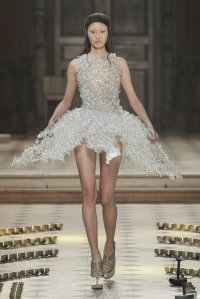
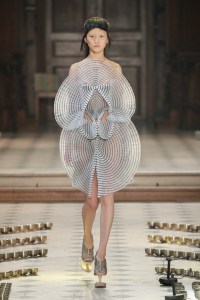
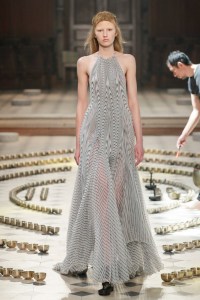
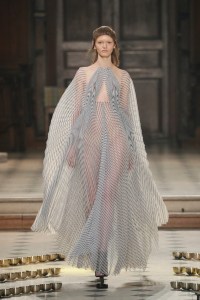
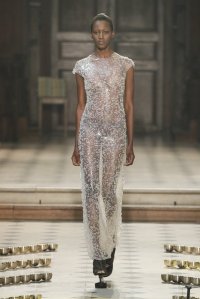
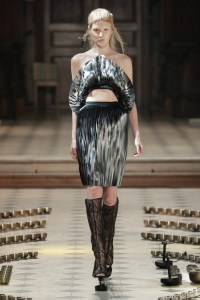
Seijaku
Seijaku is the Japanese word and concept for finding serenity amidst life’s chaos.
In this sensory journey, the regenerating power of sound could not be missing, serving as an early, forward-looking experiment anticipating the collection just unveiled.
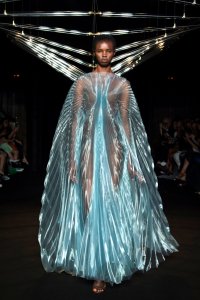
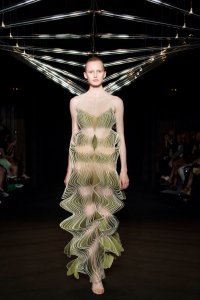
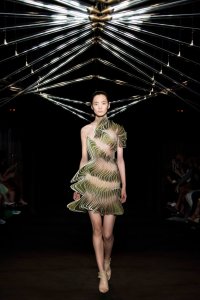
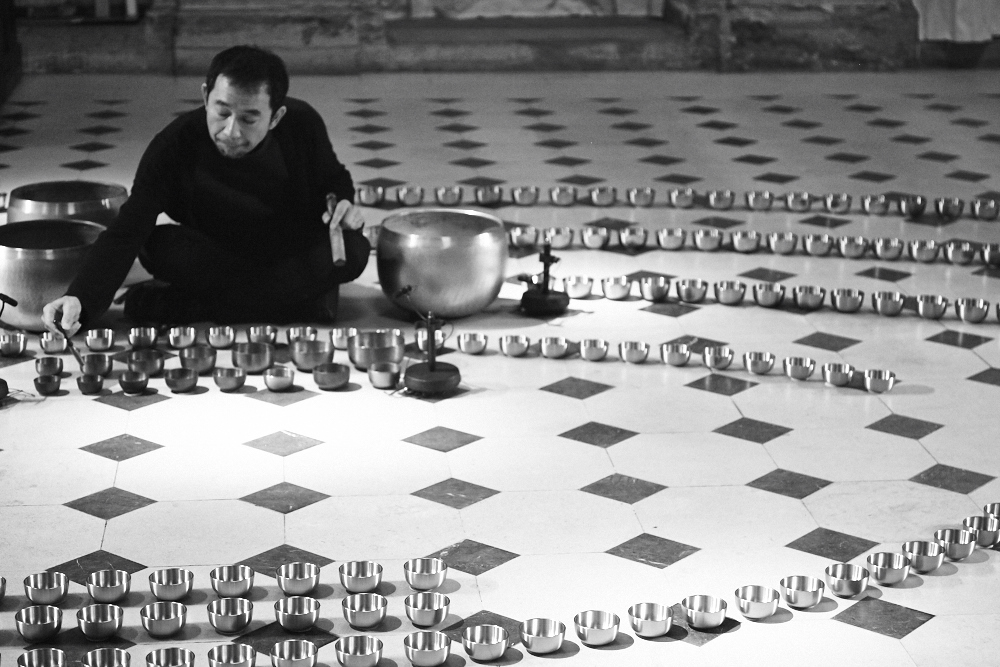
Iris van Herpen explores cymatics, a discipline that visualizes sound waves as geometric patterns. The higher the frequency of the wave, the more complex the visible designs become. To provide a seamless experience between the show and its concept, Van Herpen collaborated with Japanese musician Kazuya Nagaya, who creates immersive, ritualized compositions through the use of bronze bells, gongs and singing bowls. The artist performed live during the show in the L’Oratoire du Louvre, an ambience specifically chosen for its exceptional acoustics.
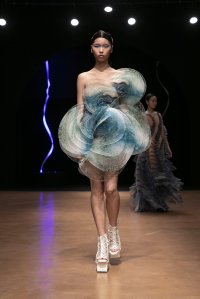
The collection reflects circular shapes and geometric patterns, encouraging experimentation. How? By coating thousands of hand-blown glass bubbles in transparent silicone, creating a bioluminescent prism around the body.
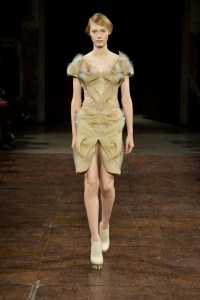
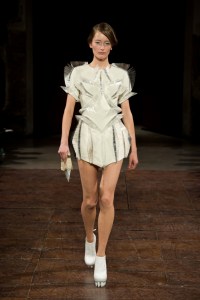
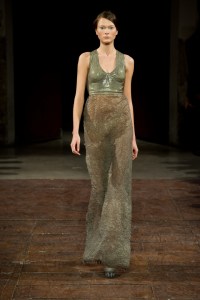
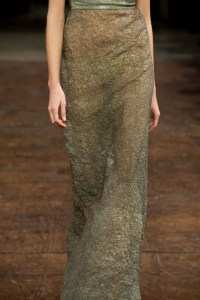
Micro
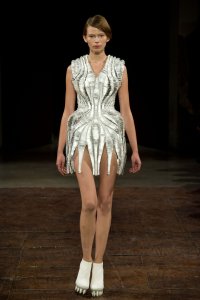
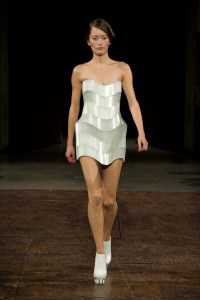
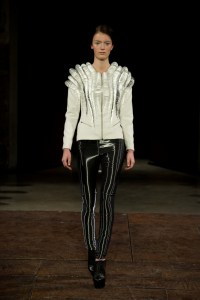
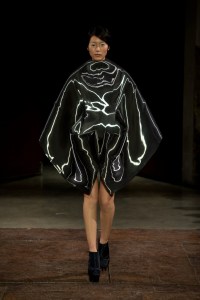
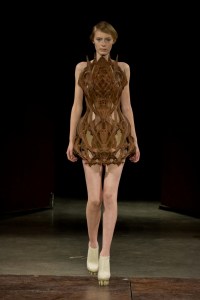
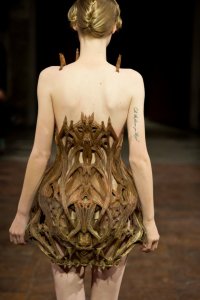
Moreover, to not forget the microbiological imprint on the designer’s inspiration, a look should be reserved to the Micro collection, peculiar yet distinctively fascinating.
Here, the creative zoomed in on the world of microorganisms, inspired by the scrupulous work of Steve Gschmeissner, one of the leading scanning electron microscopists in the world today. Van Herpen stated to be intrigued by the fact that the microbe beings are so close to us, and still, we know so little about them. Does this paradox, we might ask, truly drift so far from the paradox of self-discovery?
For this project a bridge is built between our world and the complex little world around us, never remote yet so mysterious. How to realize? It’s enough to look at a few details from the show.
Hybrid Show
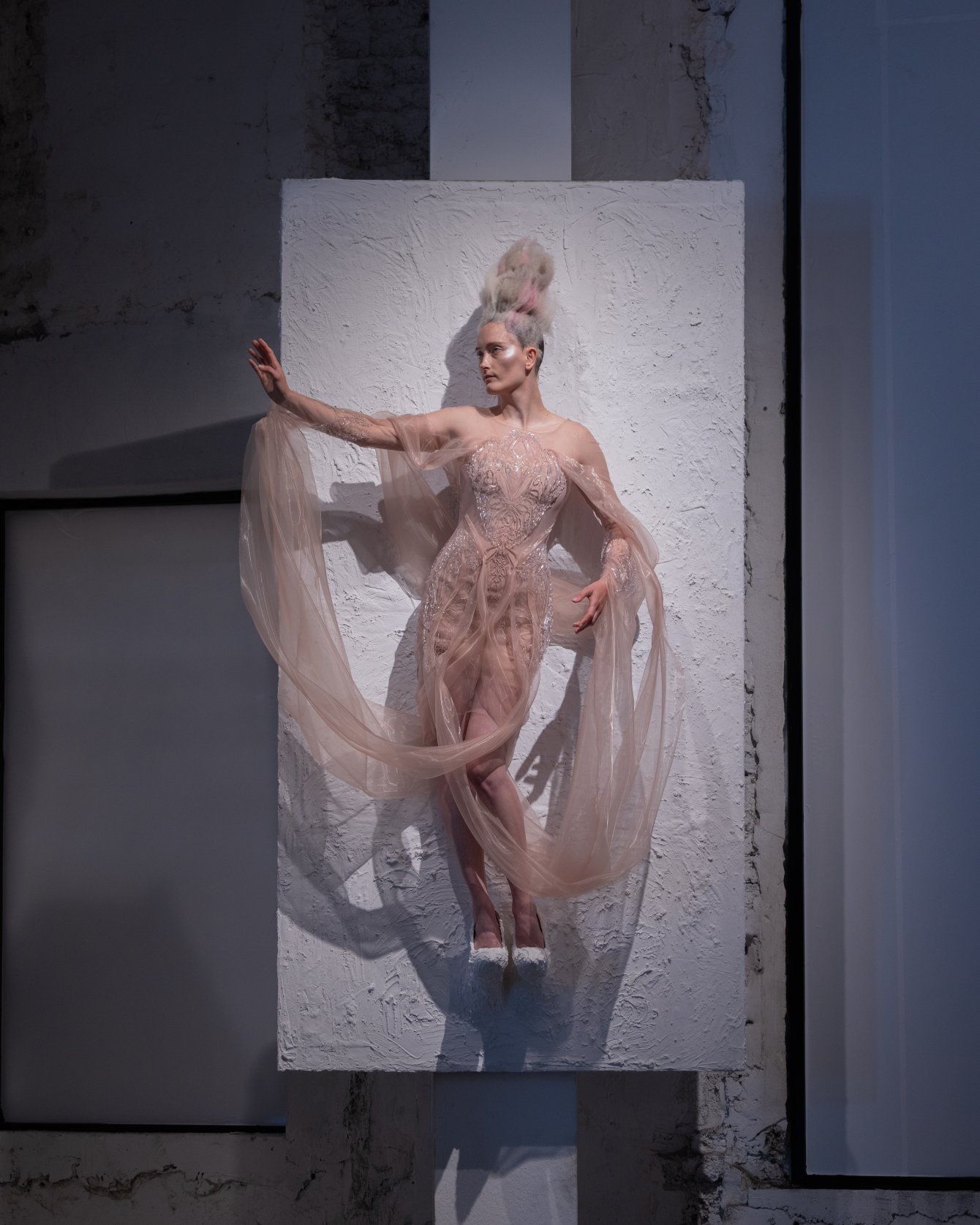
Hybrid Show, part of the Fall/Winter 2024 Couture season, marks a performative turning point in fashion’s aesthetics.
Here, haute couture merges with aerial installations, conceived not as a backdrop but as living protagonists.
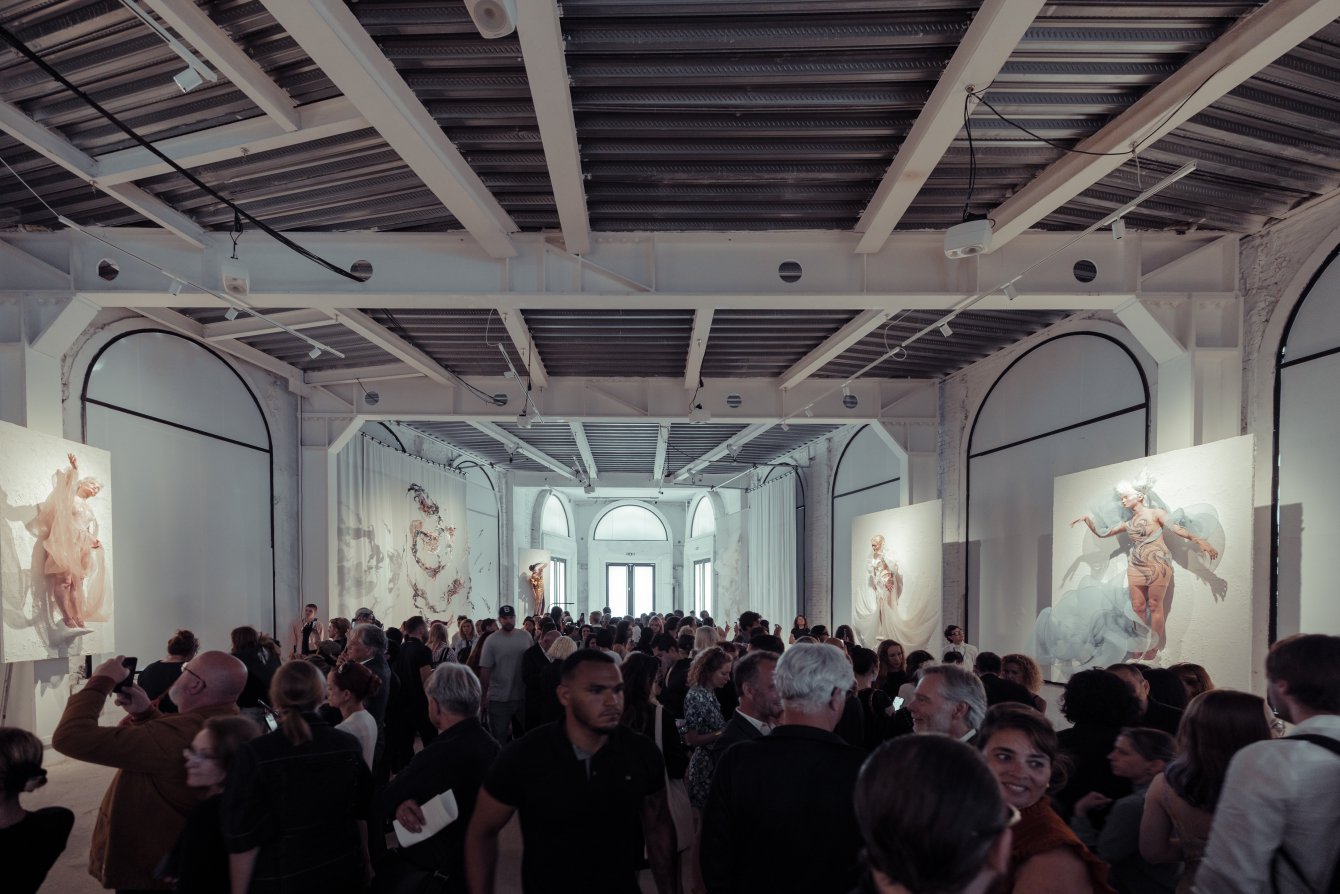
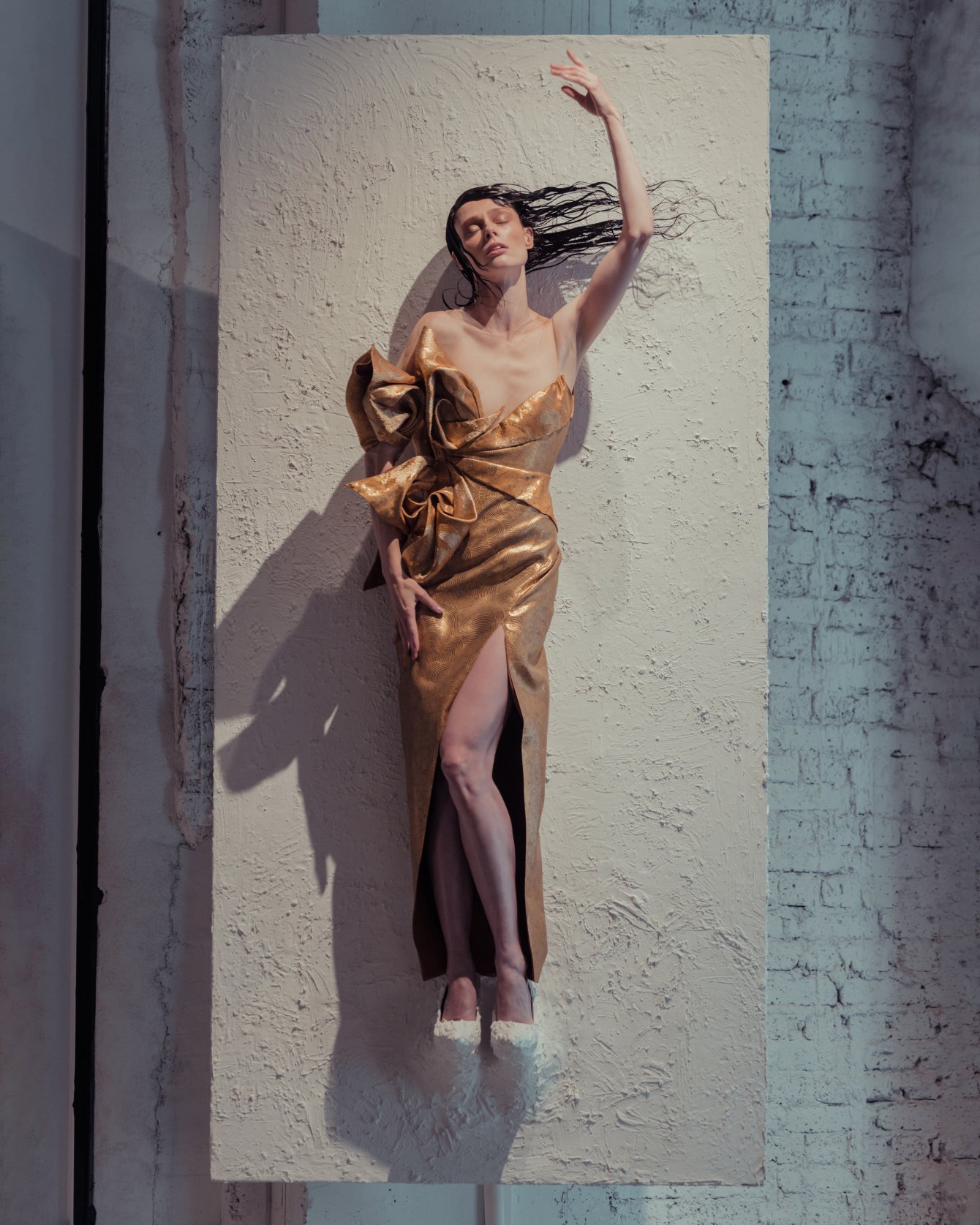
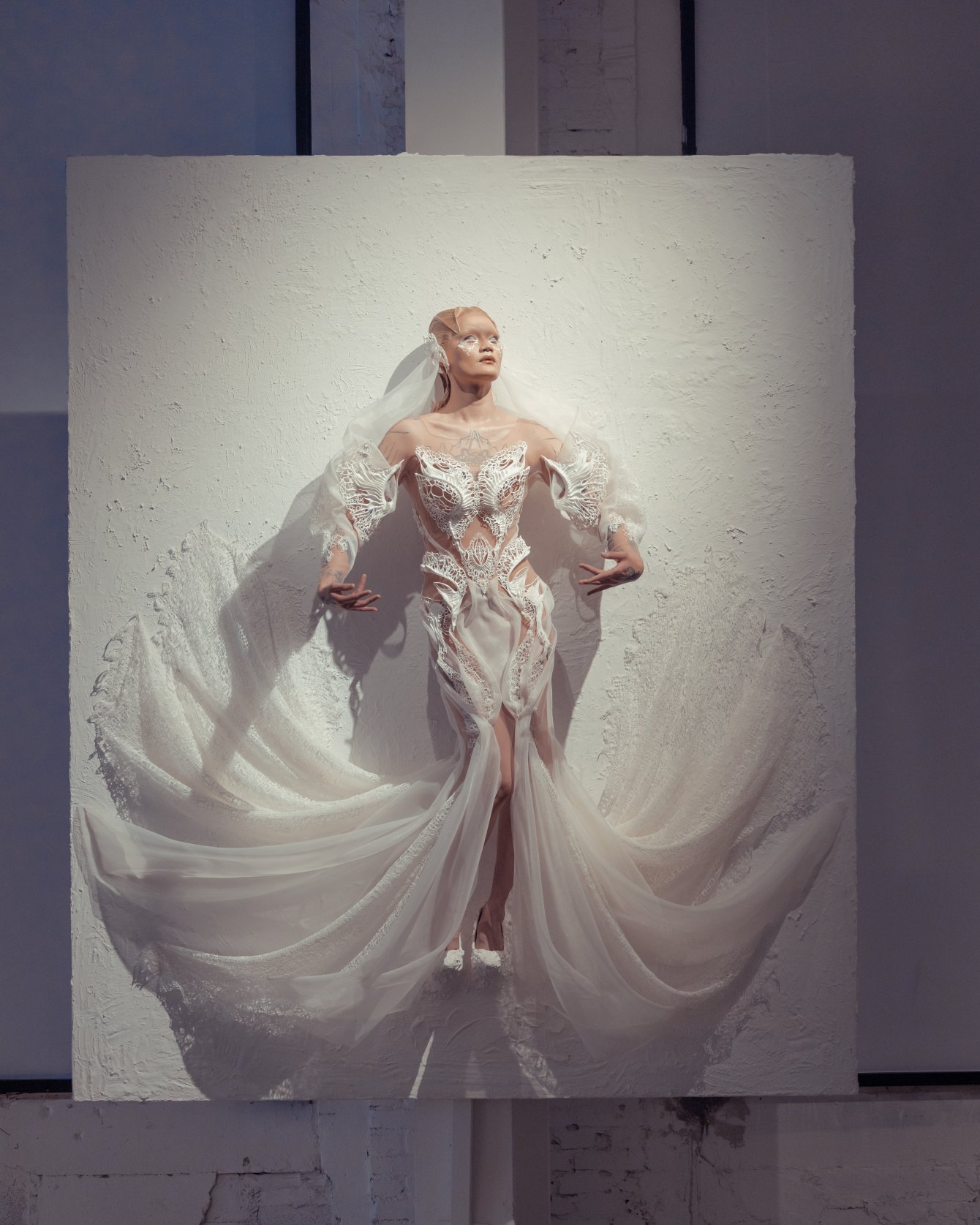
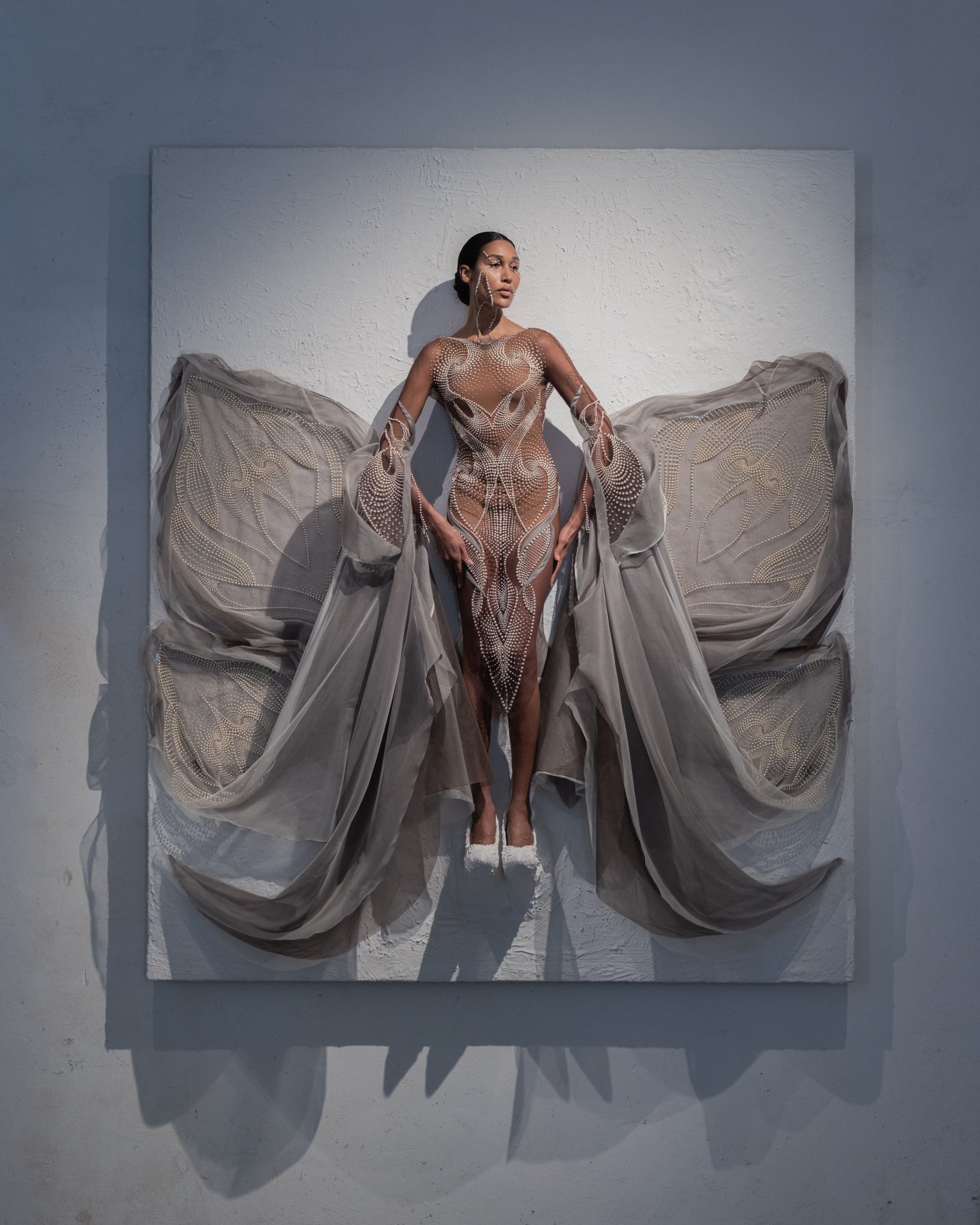
Suspended glass wings, translucent tulles and gradient 3D-printed pearl structures hang from steel frameworks, evoking the tension between matter and air, movement and stillness.
Presented during Paris Haute Couture Week, the show creates a space where garments and sculptures breathe together, proving that fashion, in Van Herpen’s vision, is not merely clothing but a living, plastic environment.
Sympoiesis
Following Hybrid Show, Sympoiesis debuted during the Autumn/Winter 2025-26 Haute Couture Week in Paris.
This collection explores the osmotic relationship between humans, nature and technology. Its emblematic piece is the “living dress,” made with 125 million bioluminescent algae (Pyrocystis lunula) which respond to movement and light, glowing as if alive.
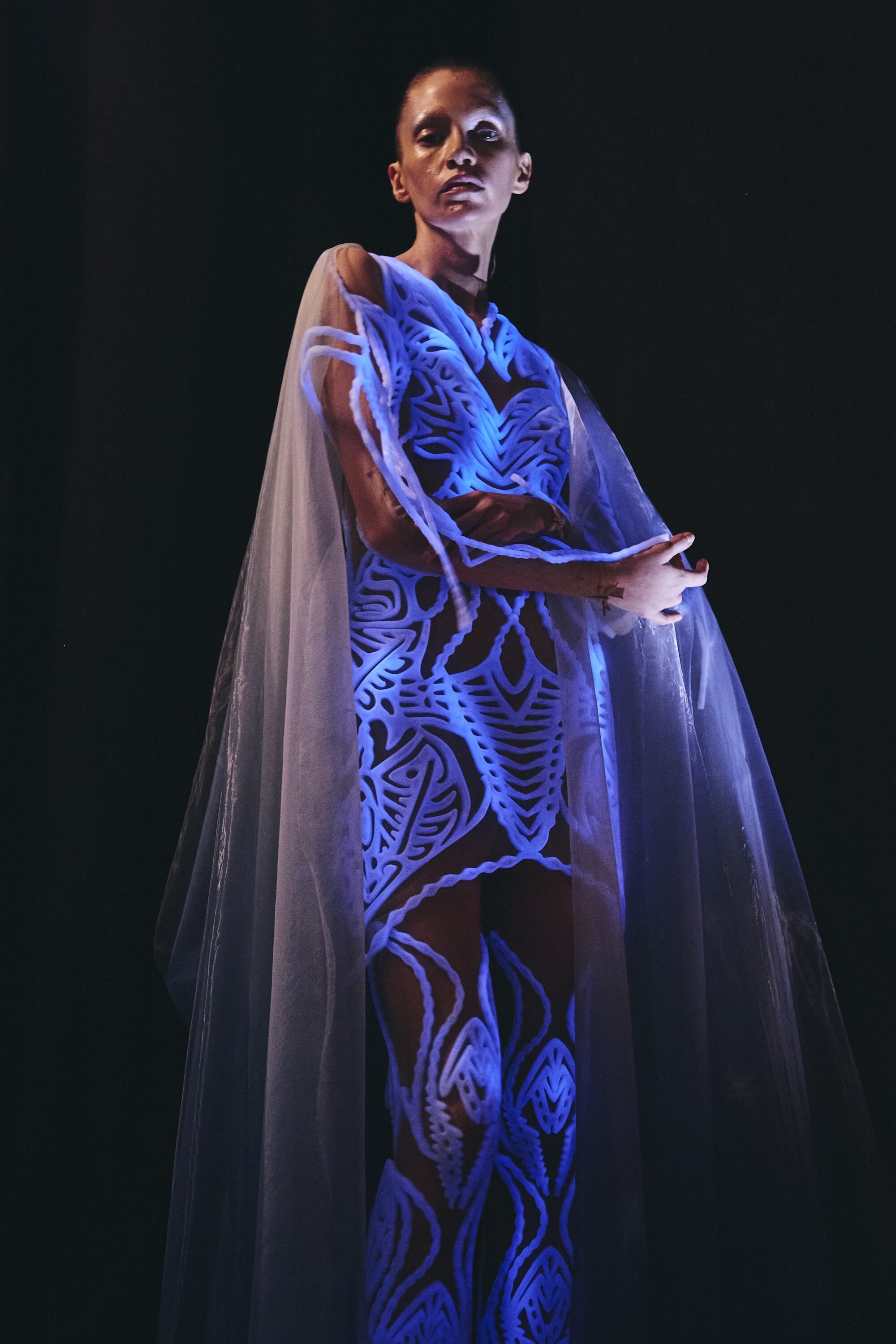
Collaborating with biodesigners such as Chris Bellamy, Van Herpen crafts materials that breathe and float, transforming couture into a living organism. Layered organza, experimental bio-fibers and acrylic meshes create silhouettes that feel both fluid and futuristic.
Sympoiesis is a manifesto of symbiosis, an invitation to envision style as a conscious structure of meaning, capable of narrating the present and shaping the future.
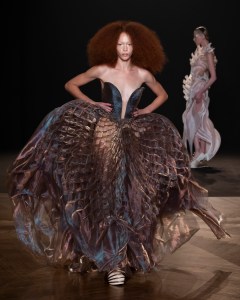
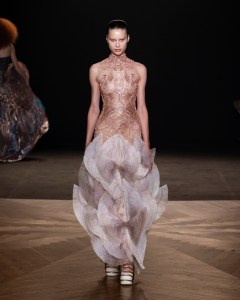
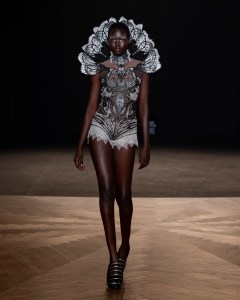
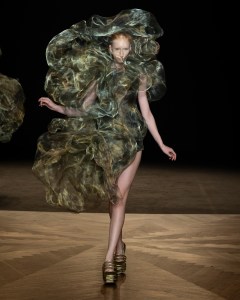
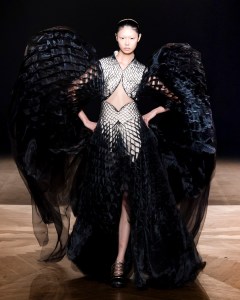
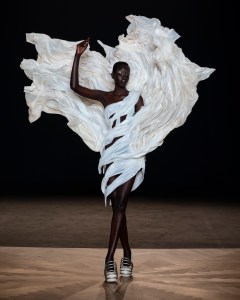
Comforting yet cathartic, the designer never shies away from challenge or experimentation, urging us to do the same: to wander beyond the visible, to shape even the most delicate carvings into sculptures of meaning, to remember that learning is an endless journey.
 A fashion hypothesis