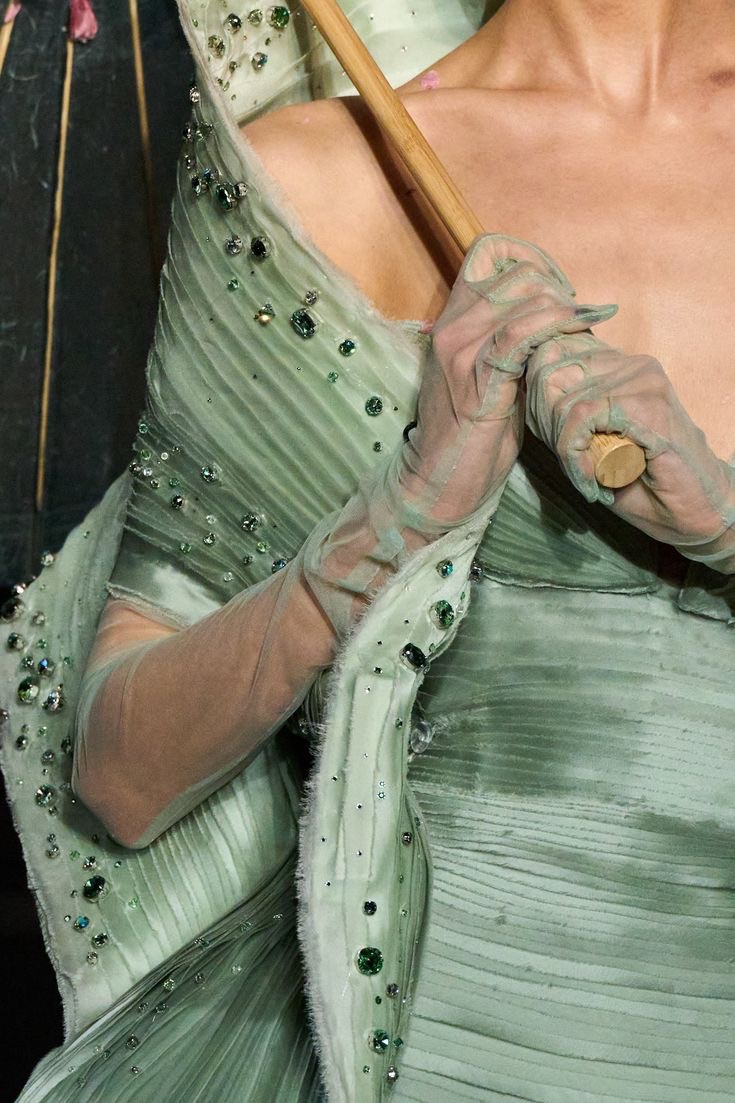
Among the many facets of fashion, a necessary space must be reserved for emerging artists brimming with creativity. As in the case of Chinese fashion designer Cheney Chan. The latter presented his new collection “Dream in Bloom” at the Salle Gaveau concert hall in Paris during Haute Couture Week. He did so by combining the tradition of Chinese porcelain -which serves as the central inspiration- and botany, perfectly rendering the details of delicate flowers in a garden of colors and stories.
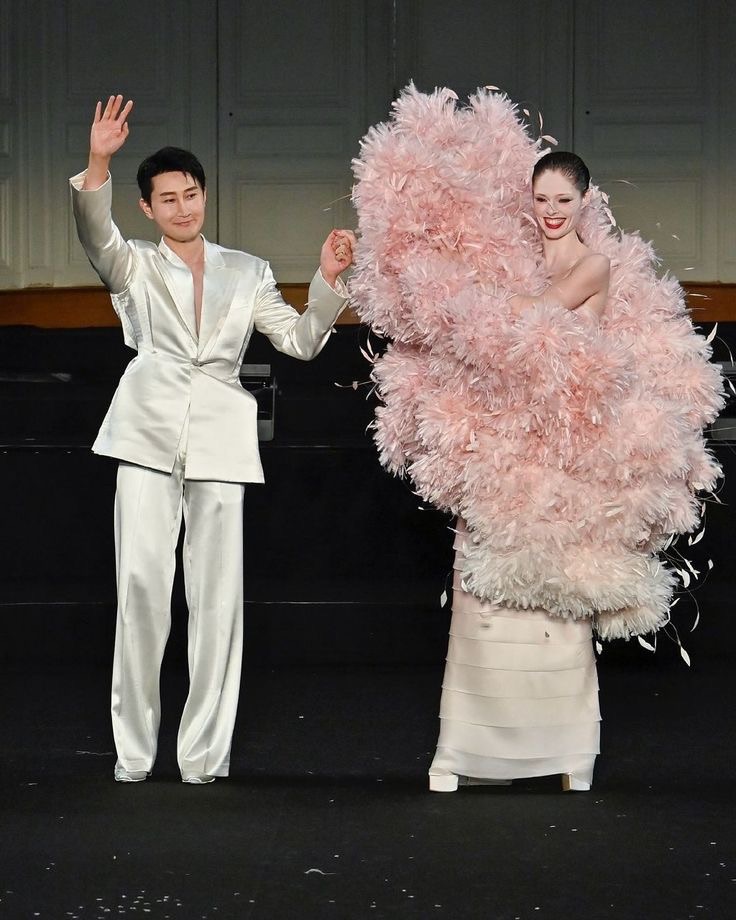
In fact, just as the technique of shaping ceramics draws inspiration from ancient methods of manufacture, the collection showcases tradition by expressing it through the beauty of form in clothing, with silhouettes shaped by curved lines originating from careful processes of sculpting and refining fabrics, resulting in sinuous and balanced forms, which can only make one recall the beauty that lies in the structure of things.
The collection, a tribute to the cyclical nature of time and life, finds as its pivot the number 12, with the mystical significance this carries. Indeed, it represents perfection, wholeness and cosmic order in traditions since antiquity. From Greek mythology to the New Testament of the Bible, through the 12 months, 12 hours and 12 zodiac signs. And Chan’s proposed narrative, inspired by numerous classical Chinese stories, attributes one of the 12 basic characteristics to each design. Purity, courage, charm, resilience, endurance, passion, freedom, heroism, independence, clarity, responsibility and authenticity. To solidify these aspects are the characteristics of a gallery of flowers, which have always been considered instruments of language with deep symbolic value and great communicative potential.
The designer has skillfully integrated the background of philosophical, mythological and theological culture with the natural beauty of the flowers and butterflies offered in the collection. The stated intention is that of prompting reflection and nurturing a sense of rebirth and transformation in the viewer. “Each flower symbolizes the delicacy and vitality of women; each butterfly embodies their transformation and luminosity,” he admits.
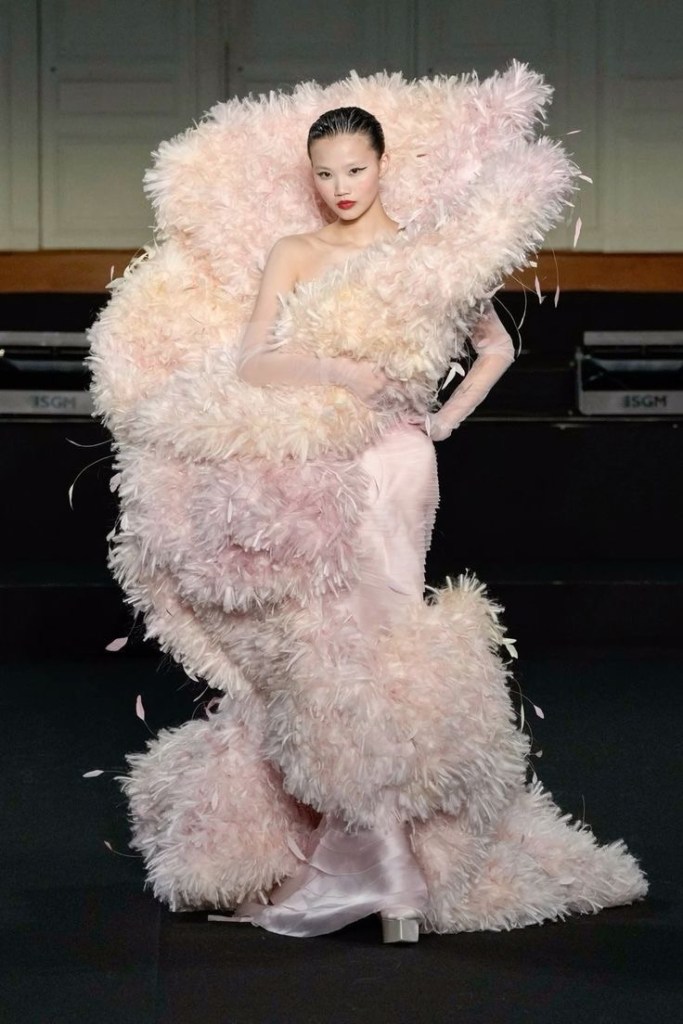

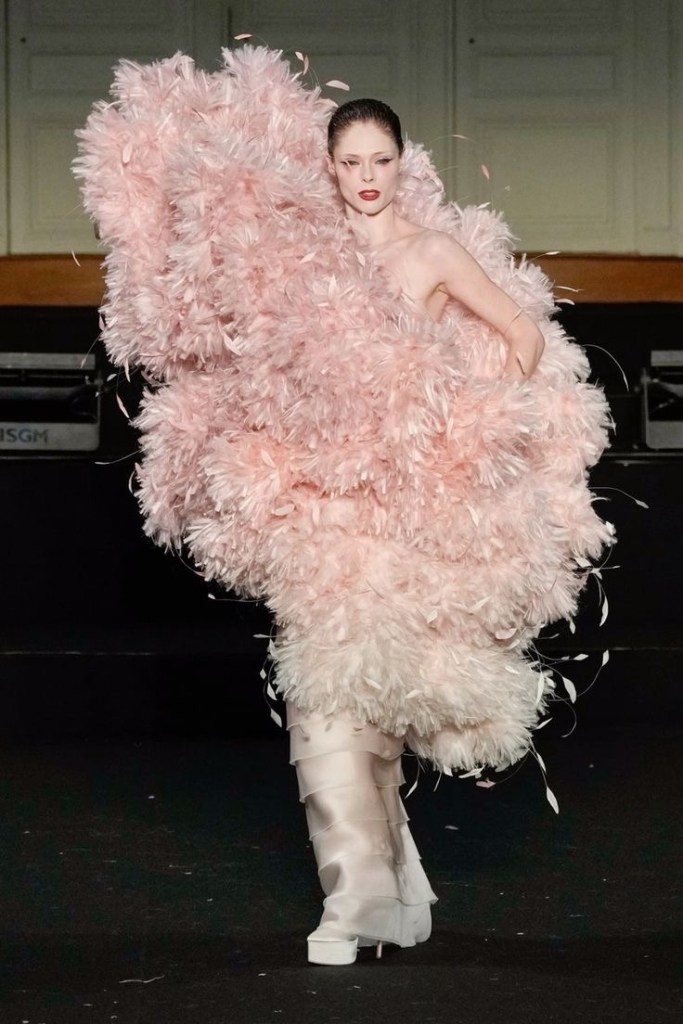
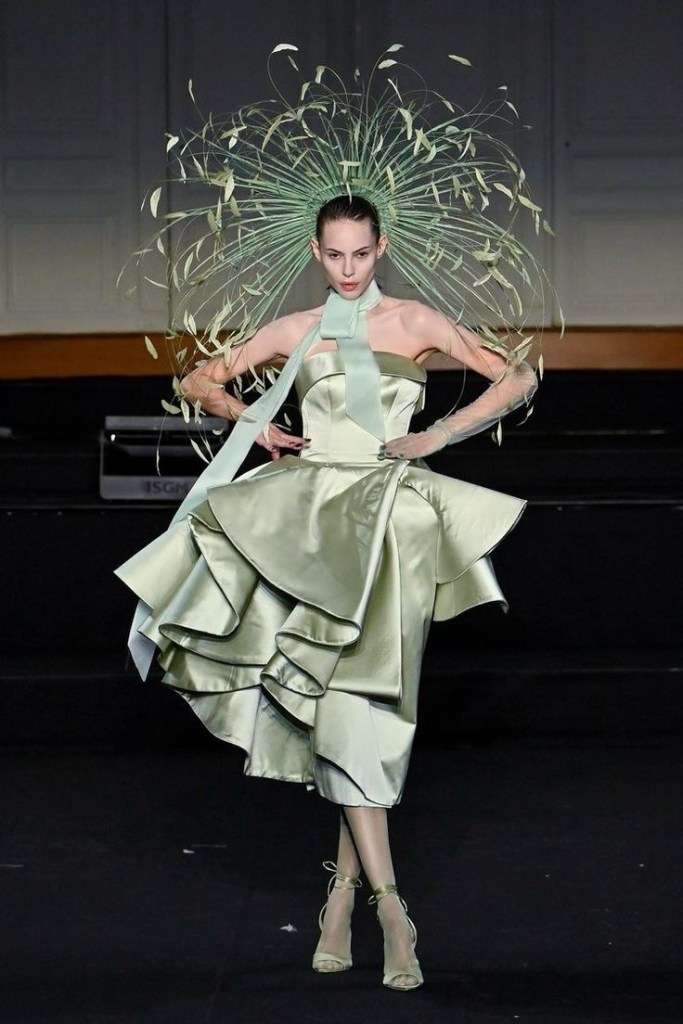
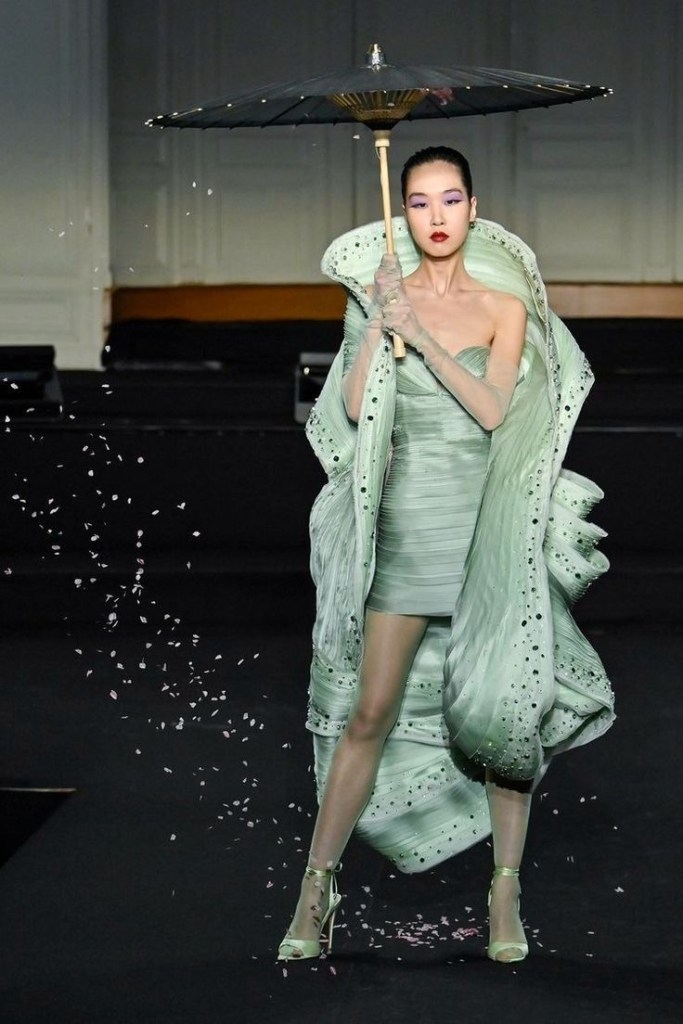


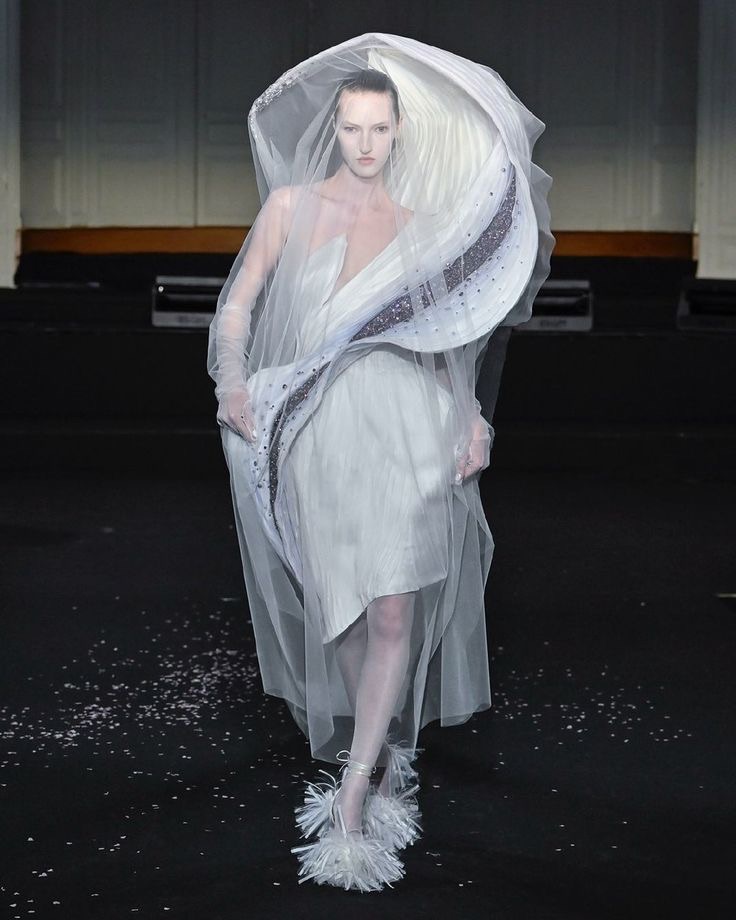
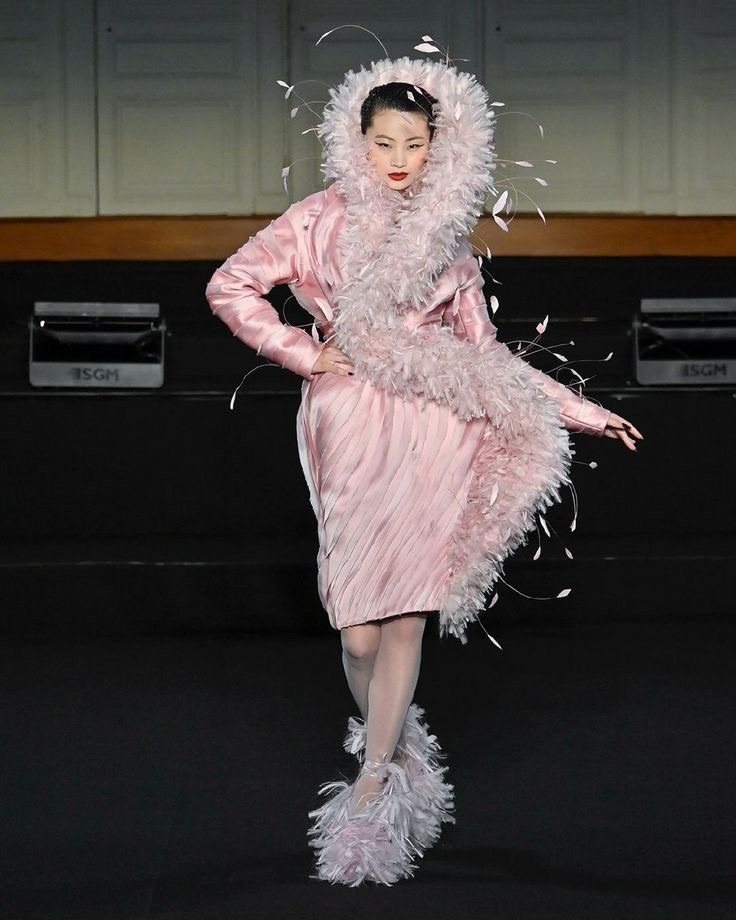
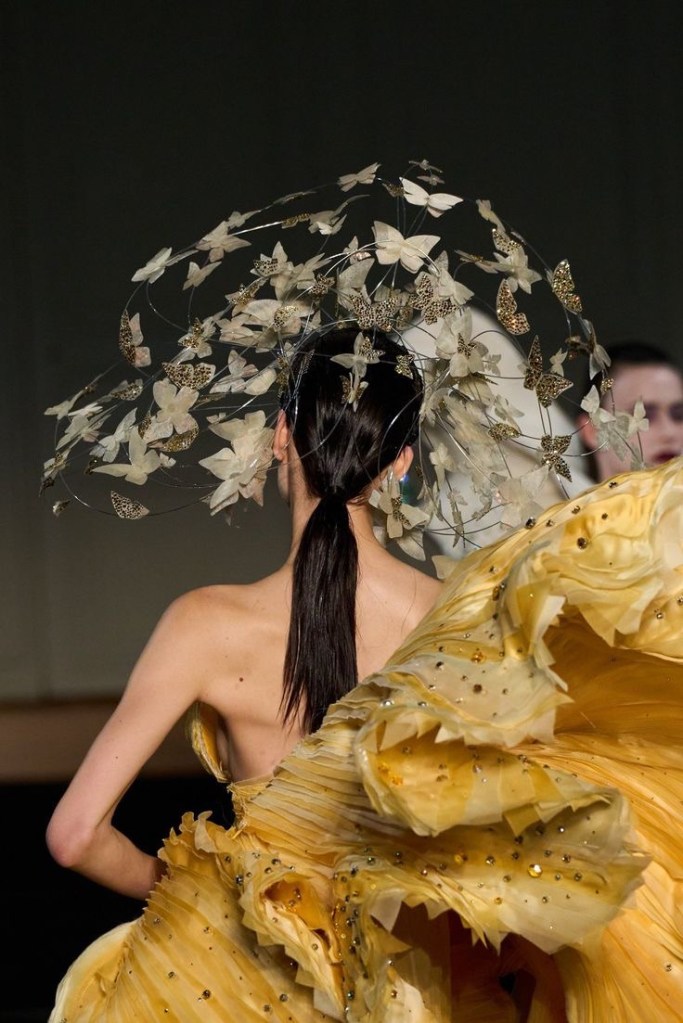
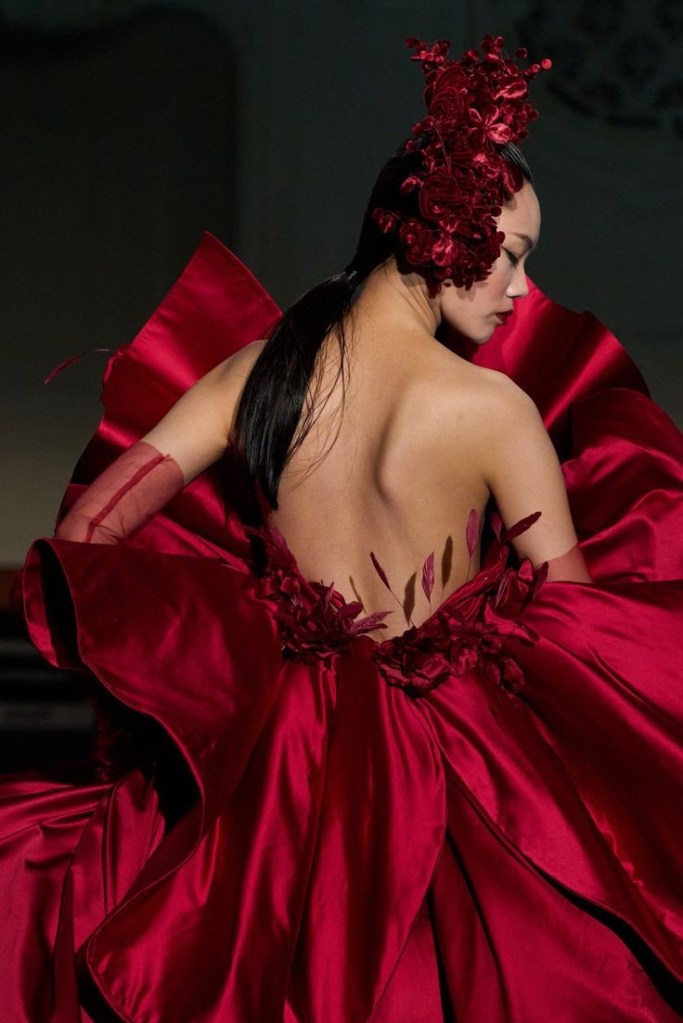
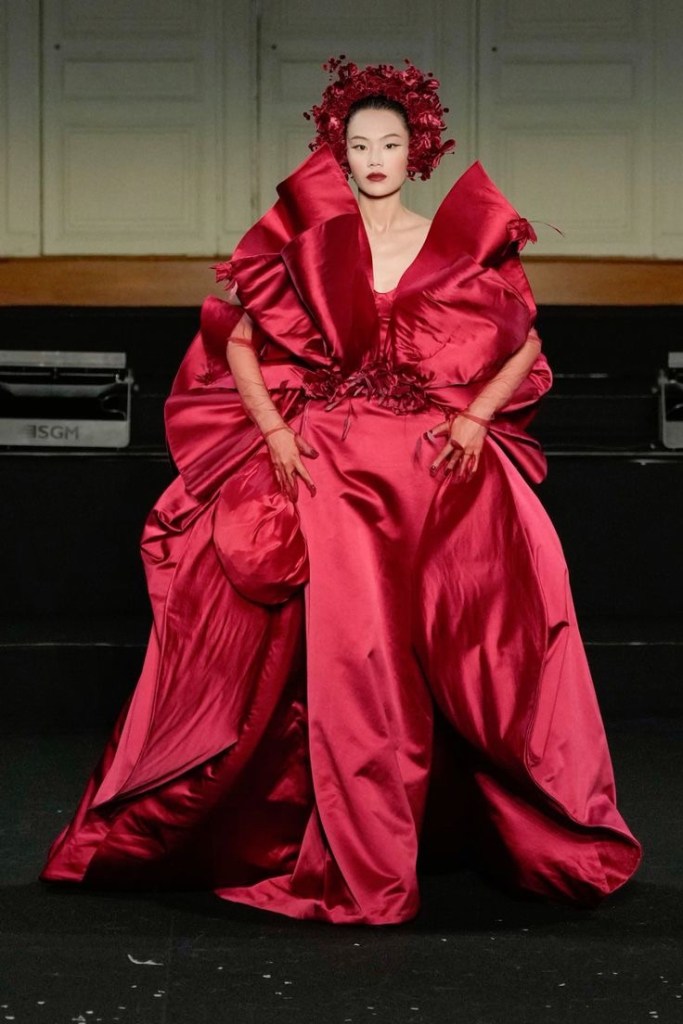
So we look at these flowers, trying to assimilate some of the botanical elements that characterize them and the senses related to the value system associated with them, and we can propose a series of interconnections and parallels between the garments worn and the nature traits represented.
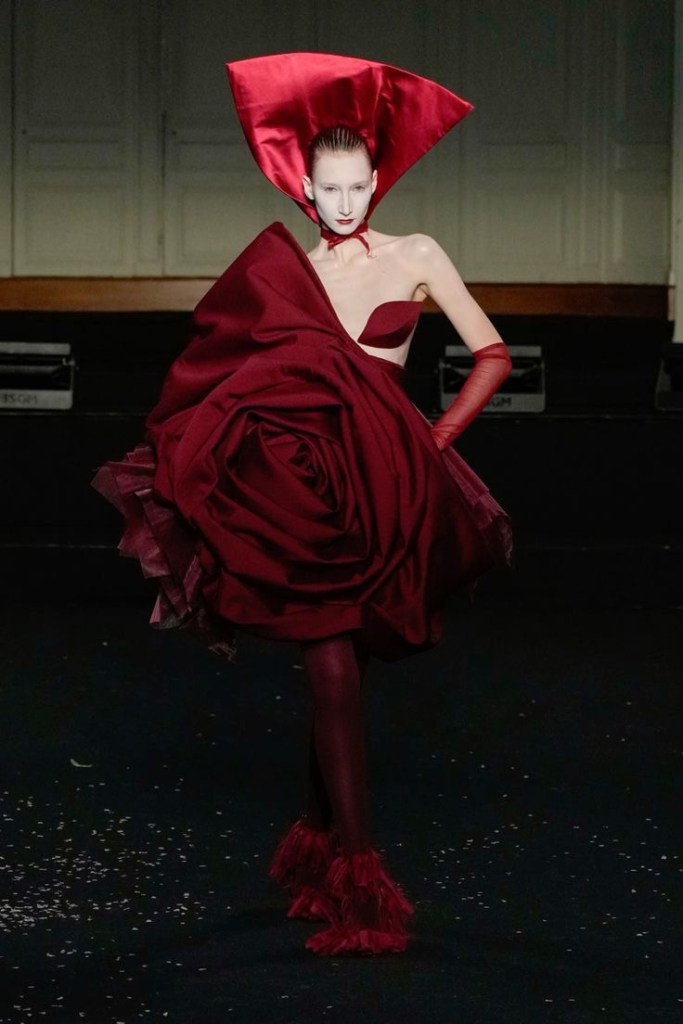
Take for example the rose, a peculiar flower that despite its most classical representation is actually distinguished in a huge array of varieties, each articulated in its own symbolic meanings and botanical characteristics. Following on the trail previously proposed, it is interesting to report the mystical aspect that illuminates the birth of this flower according to Greek mythology. Belief has it that the goddess of flowers, Chloris, transformed a deceased nymph into a graceful flower with crimson petals that preserved its beauty intact. It was then Dionysus who gave her the unmistakable fragrance while the Charites, the three deities associated with beauty, gave her a beautiful appearance. Thanks to the work of Apollo, the right climatic conditions were finally created to allow the flowering of what is considered the queen of flowers par excellence, with its aura of charm.
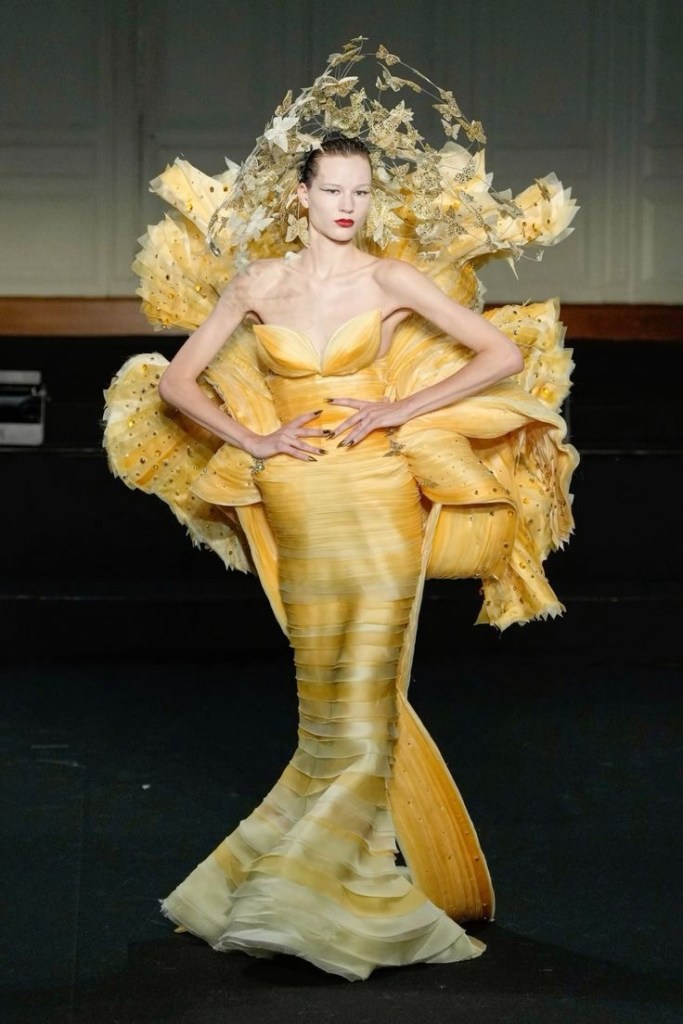
Impossible then not to notice the distinctive brightness of marigold, the meaning of which hints at healing. This is obviously no accident, since it is a medicinal mainstay in all cultures. With its healing properties, this flower sits in a symbolic sphere residing far beyond ornamental value. But not only that, this sun-colored jewel boasts a rich cultural history in Mexico. Often associated with the spiritual cycle of life and death, it is a perfect choice for Day of the Dead celebrations, believed to comfort the souls of the physically distant. It is often incorporated into “ofrendas” (offerings) along with favorite foods, candles and mementos of the deceased. These ofrendas are set up to create a welcoming space for the spirits to return to and enjoy the gifts reserved for them, and to keep the sense of emotional responsibility ignited in the family members dedicated to caring for their memory.
The carnation, with its elegant petals, is present as evidence of Greek, Roman and Christian traditions, linked to them once again by religious meanings. From Greek etymology it is defined as “the flower of the gods,” a name given to the flower by a certain Theophrastus. Literally “Dianthus,” often associated with the god Zeus, to whom it was offered as a gift. Similarly in Roman history: a symbol of Jupiter and a commemorative object on sacred occasions. Finally, in Christian tradition, the carnation is said to have originated from the tears of the figure of Mary, after seeing her son meet his destiny on Mount Calvary. And still, beyond the meanings assumed in sacredness in different eras and cultures, the charm of this flower, which has retained a positive meaning of love, joy or admiration, but also passion and resilience, remains vivid.
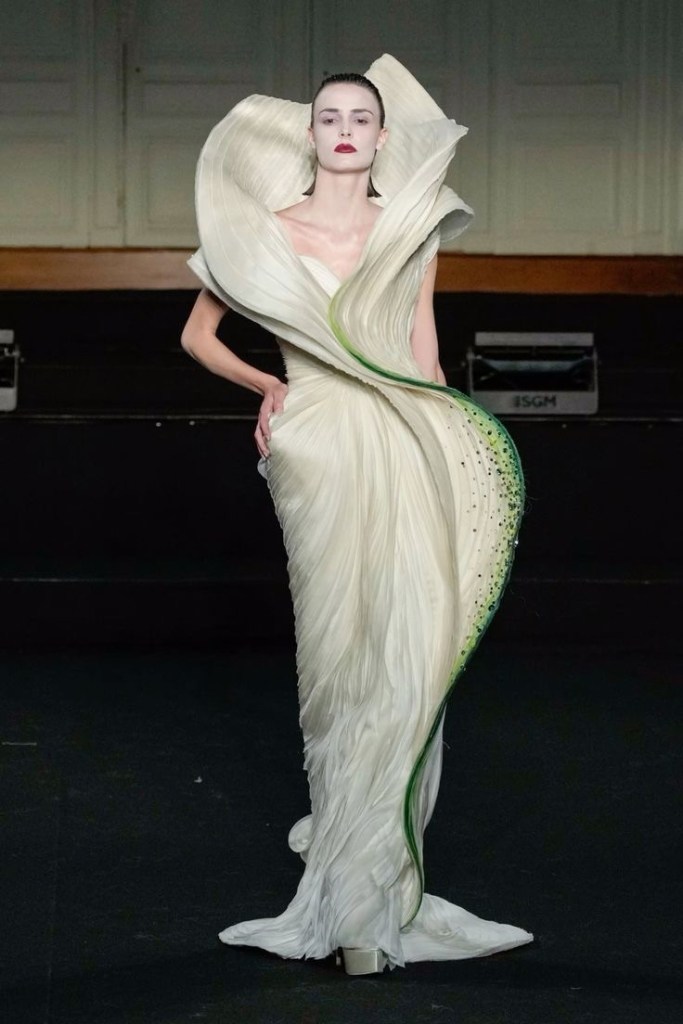
The arum lily, one of the most elegant flowers, is derived from the Greek word “kalós”, meaning beautiful, making it a symbol of pure and delicate beauty. The narrative has it that arum lily flowers sprang from the mother’s milk of Hera, goddess of the earth and creation. And from this etymological root to today, the most popular meanings associated with this flower remain purity, perfection, elegance and eternal life. It is not surprising when one considers that according to the same belief the flower has the same origin as the Milky Way and the starry sky in which we are wonderfully immersed.
In this journey through symbolism and botany, we need to end where we began: by observing the contingencies of a parade that is complex but at the same time rich in stimuli, perhaps precisely because of this. The most tangible stimulus is certainly visual. By focusing the audience’s attention on the models’ eyes, as well as on their skin, in a meticulous combination with fresh flowers and headdress ornaments, the designer pays homage to botanical painting and facial aesthetics, as indeed one would expect from someone who marries innovation with cultural tradition. The models’ makeup in particular stands out, which, evocative of watercolor and ink paintings, undoubtedly contributed to the ethereal aesthetic of the collection, posing as a further reference to Chinese tradition.
And so, among sumptuous skirts and tulle ruffles, through the expressive charge of a myriad of colors pronounced by cherry red lips, Chan’s invitation is to look at our surroundings, and maybe even a little inside of ourselves. Recalling our roots without forgetting that we can compose with their fragments a mosaic of novelty and life.
 A fashion hypothesis
Leave a comment