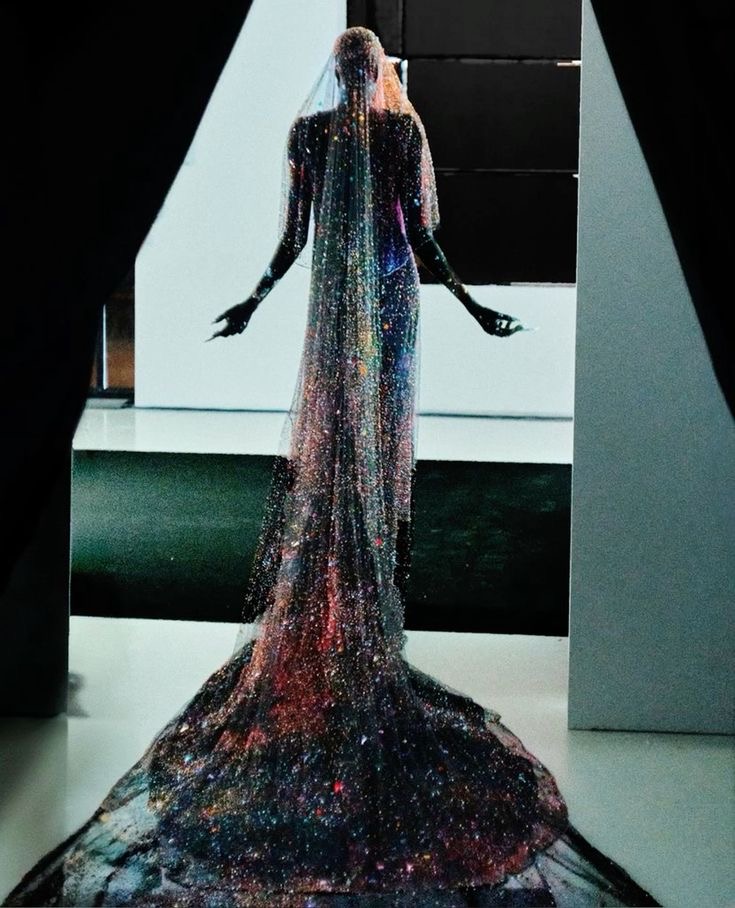
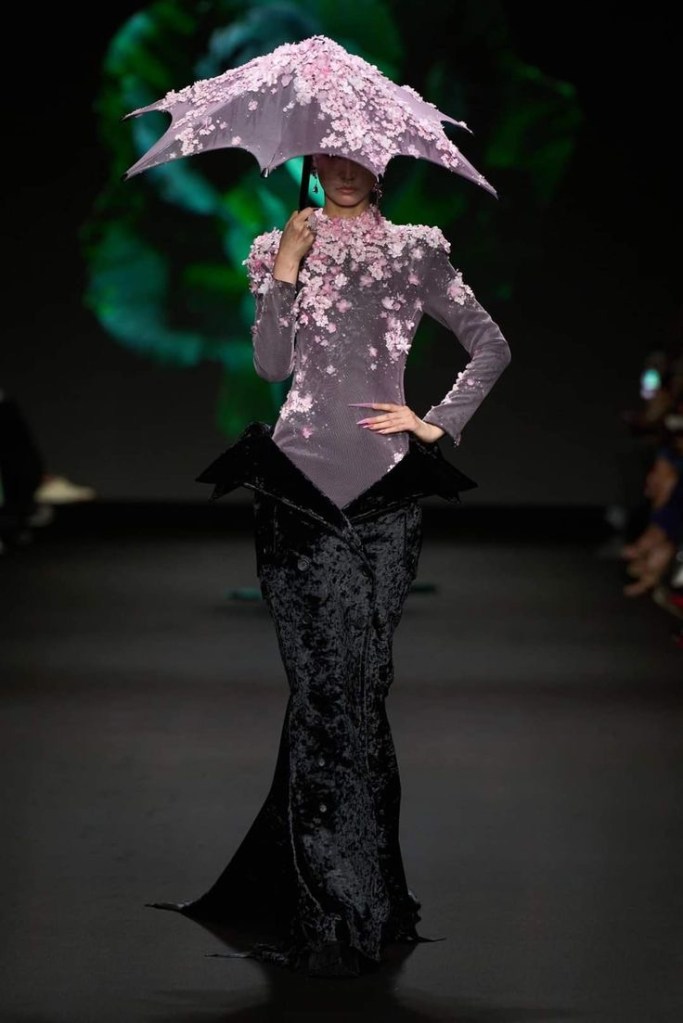
Black draperies and cloaks dotted with snowflakes, flamboyant silhouettes alternating with essential fabrics awash in cherry blossom flowers. Pastel-colored coats sprinkled with butterflies and vivid leafy dresses. Silky layers of skin toned fabric, a blood-red sheath covered in standing bugle beads. Skeleton mannequins and layers of cosmic tulle embroidered with galaxies of tiny multi-colored crystals, shimmering in the dim light. If you were asked to describe the essence of life and time you would notice that there is little to think about beyond the intriguing show displayed on the runway.
Chinese designer Robert Wun celebrated the 10-year anniversary of his label with a couture show titled “Time”. Born in Hong Kong, the creative moved to London where he studied at London College of Fashion. He graduated in 2012 and launched his own homonym fashion brand in 2014. The brand debuted their first runway show in Paris, January 2023, with the support of Bruno Pavlovsky at CHANEL. Wun became the first designer from Hong Kong to join the Haute Couture Calendar in its history, as a guest member of The Fédération de la Haute Couture et de la Mode. He stated that the aim of the collection was to reflect on “why I do fashion, and what does time mean?” The answer he found is quite simple yet undeniably profound. “To accept that one day everything ends—and that’s okay.”
He told Vogue: “To say that we’ve got to live in the moment is a cliché, but, really, what you’re doing you can only do it once, so better enjoy it no matter success or failure.” To translate the concept of the passing of time into actual clothing, Wun envisioned the progression of seasons.
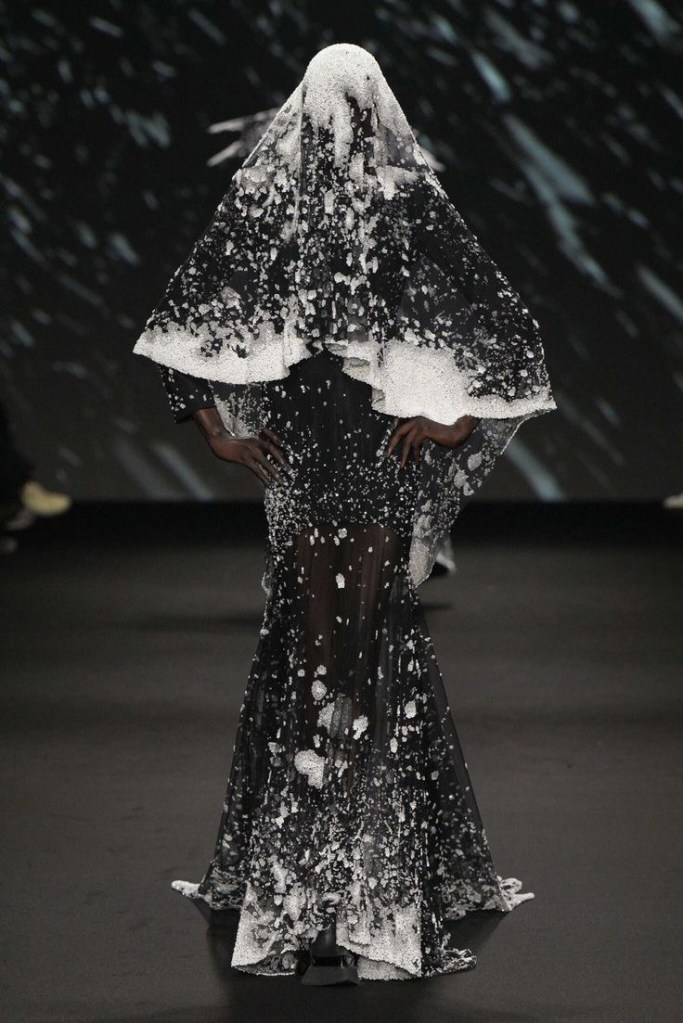
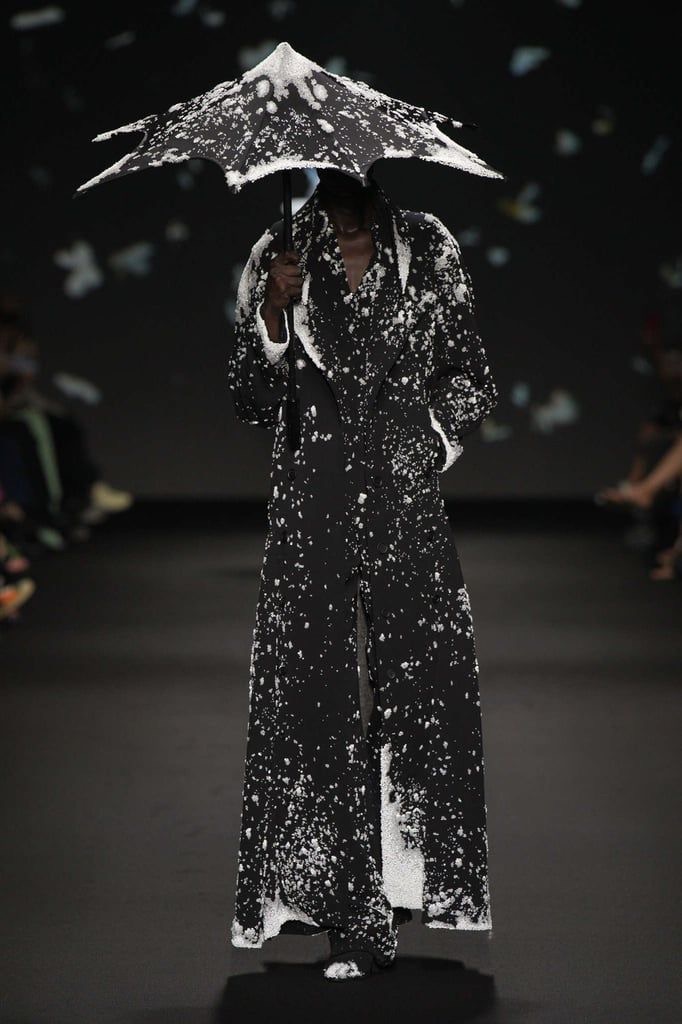
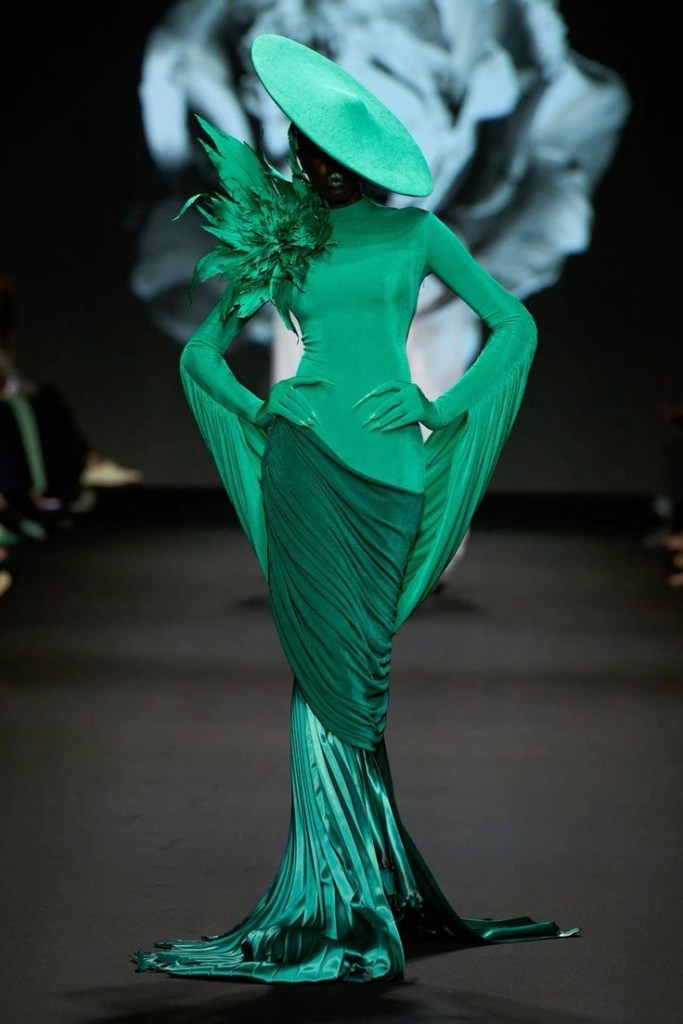
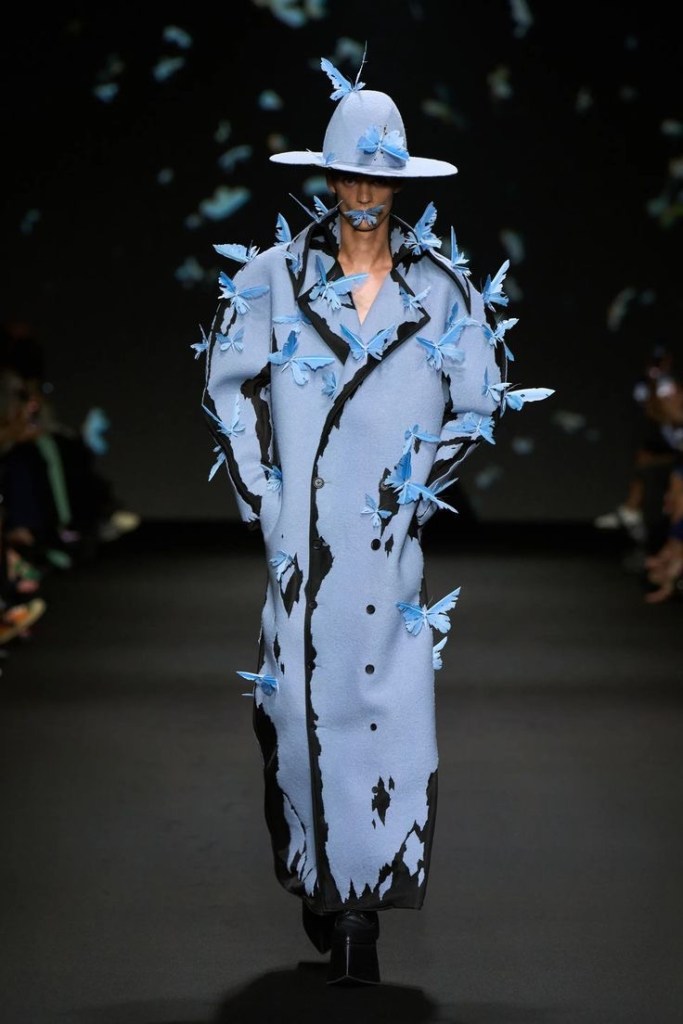
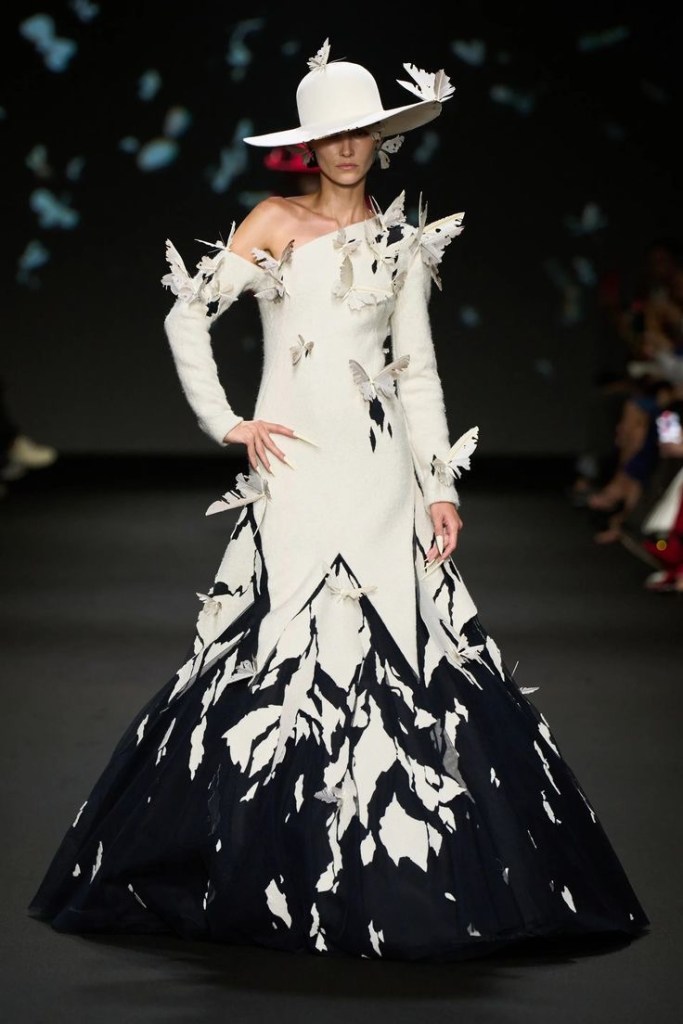
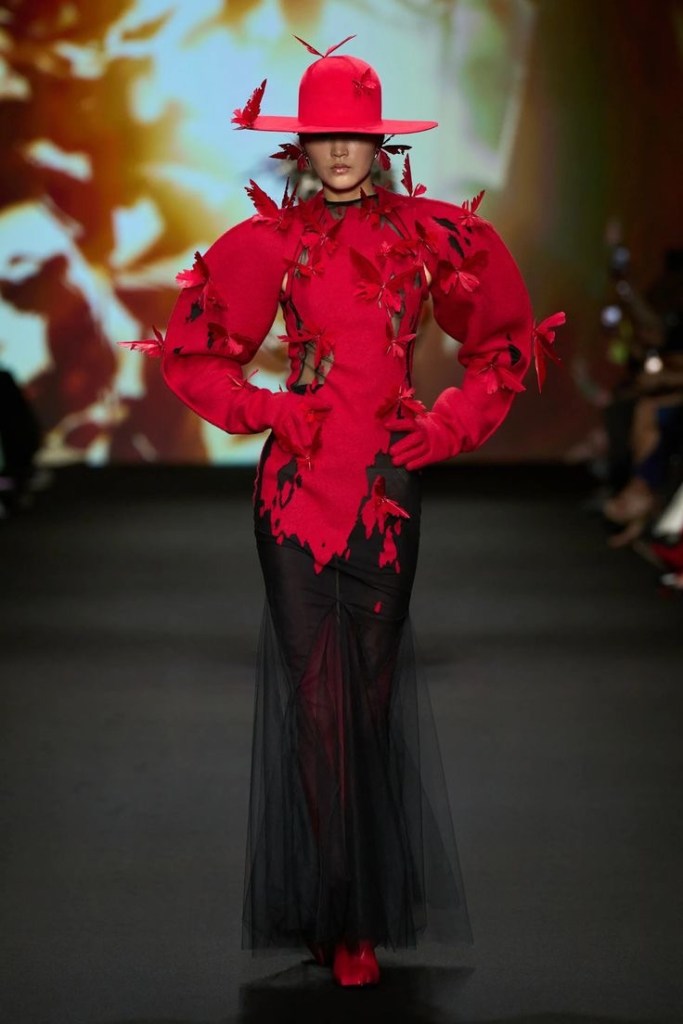
Opening the show with winter, a period that makes people more reflective, according to the creator of the collection. A black gown with a matching veil embroidered in crystals, portraying the first falling of snow, moved elegantly through the shadows of the venue. A snowy effect was also rendered as a white layer on a slender trailing coat that looked as if it had been shredded apart and then mended back together with a kintsugi-like technique. This expression, kintsugi, refers to the Japanese art of putting broken pottery pieces back together with gold, a metaphor that serves as an invite to embrace the broken pieces of ourselves as an indispensable part of the human experience. And clearly, repaired cracks of the pottery represent the healing process that gives value to the end result rather than detracting from it.
“In Chinese philosophy, flowers are beautiful because they aren’t meant to be forever. If they’d blossom forever people wouldn’t find beauty in them”, stated Wun.
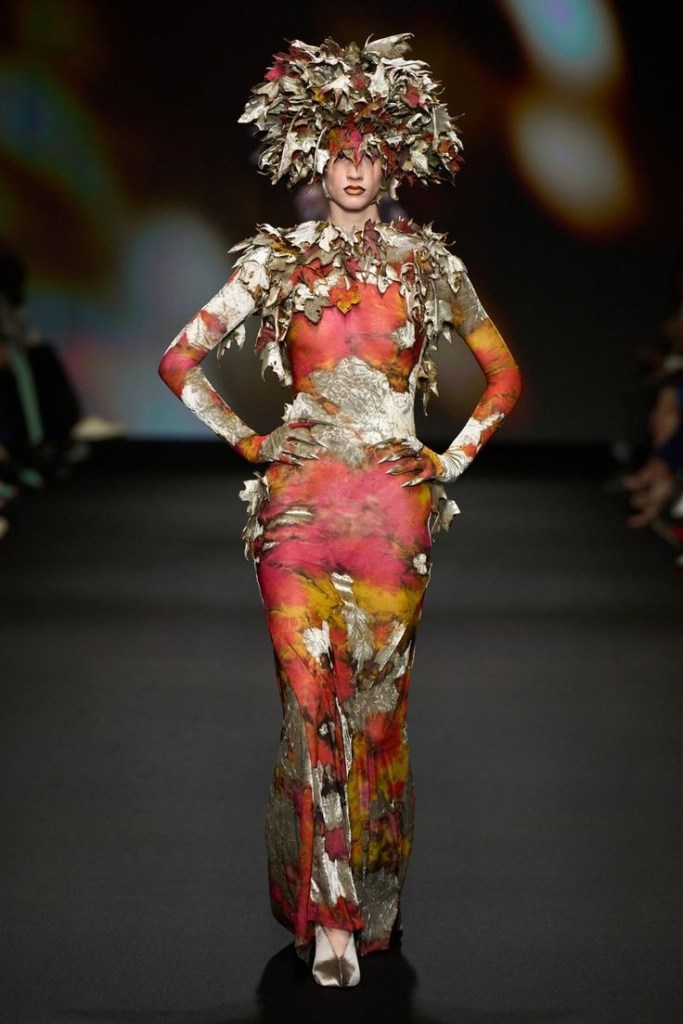
For this reason, flowers and butterflies were depicted in their decay rather than in their gloriousness, since it is in their vanitas that beauty lies. And so, spring and summer are not to be imagined as sparkling splashes of color on a blue sky, but rather as timid but wise pencil strokes against a background of inevitability. Full of hope, yet quite nostalgic. Time’s erosion on every living being was rendered by burnings repeated with conviction throughout the collection. The team scanned the burn marks done on a piece of organza, then printed it on silk and did further burning on the edges to emphasize the effect. Clothes of vivid red color and carpets of leaves trace the conclusion of the cycle bringing with them the wonder of autumn, on a suggestive background.
However, the story did not end there. In the collection’s narration of the passing of time, the four final looks represented the four layers of the human body. The skin, flesh, bones, and soul.
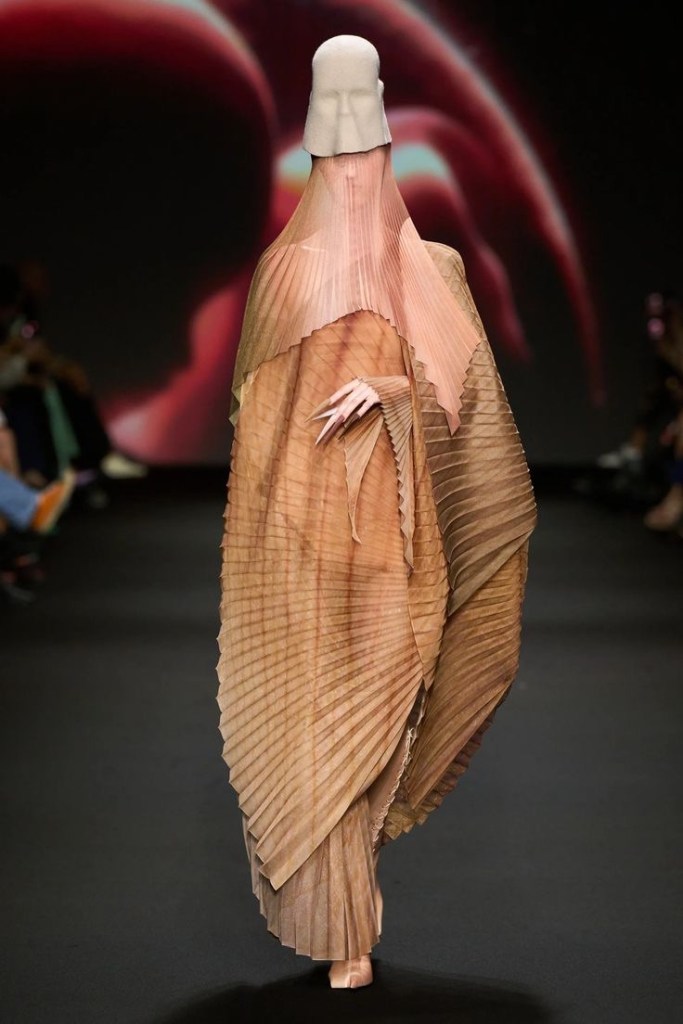
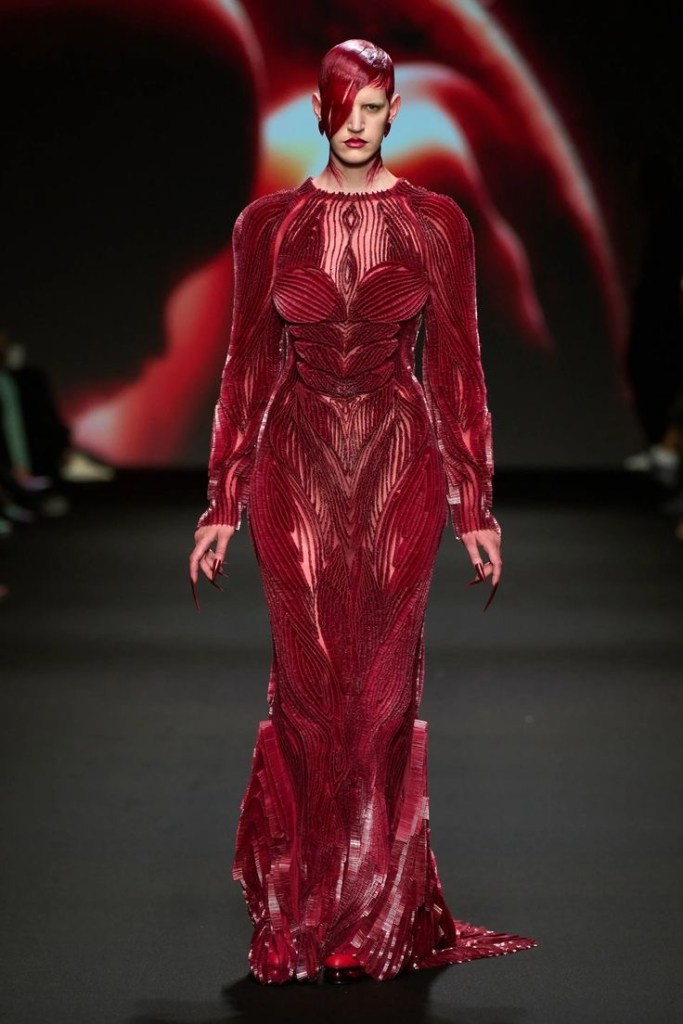
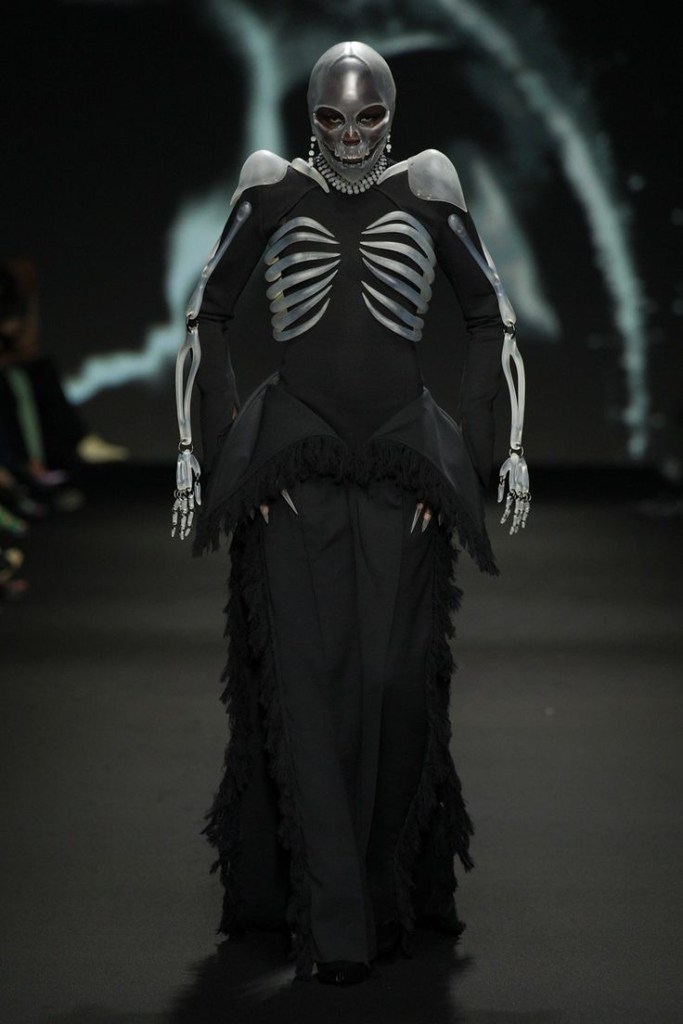
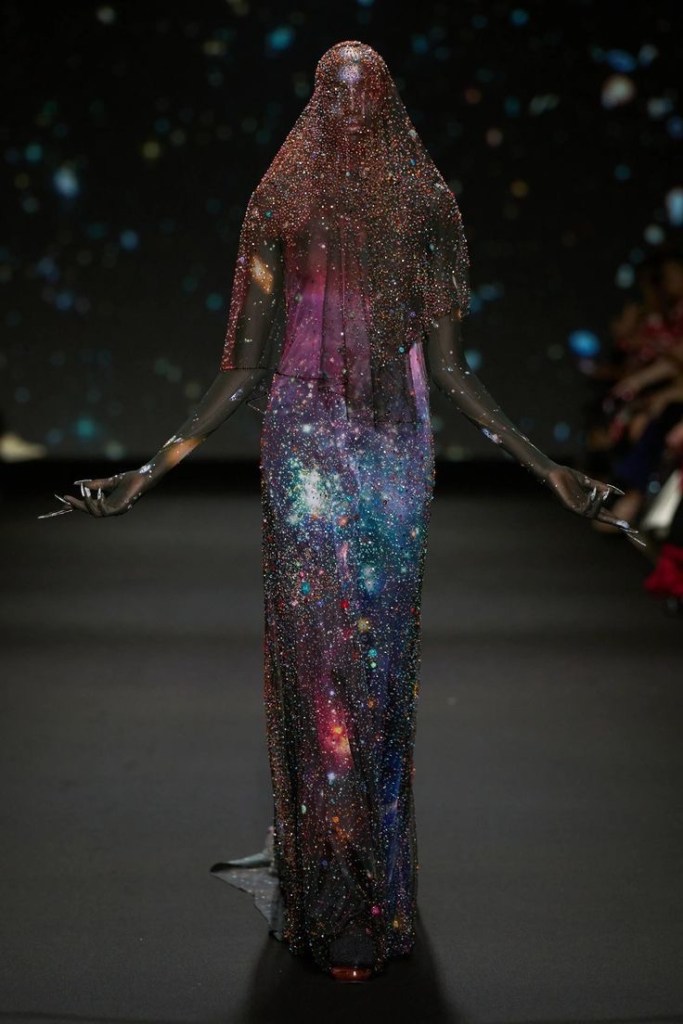
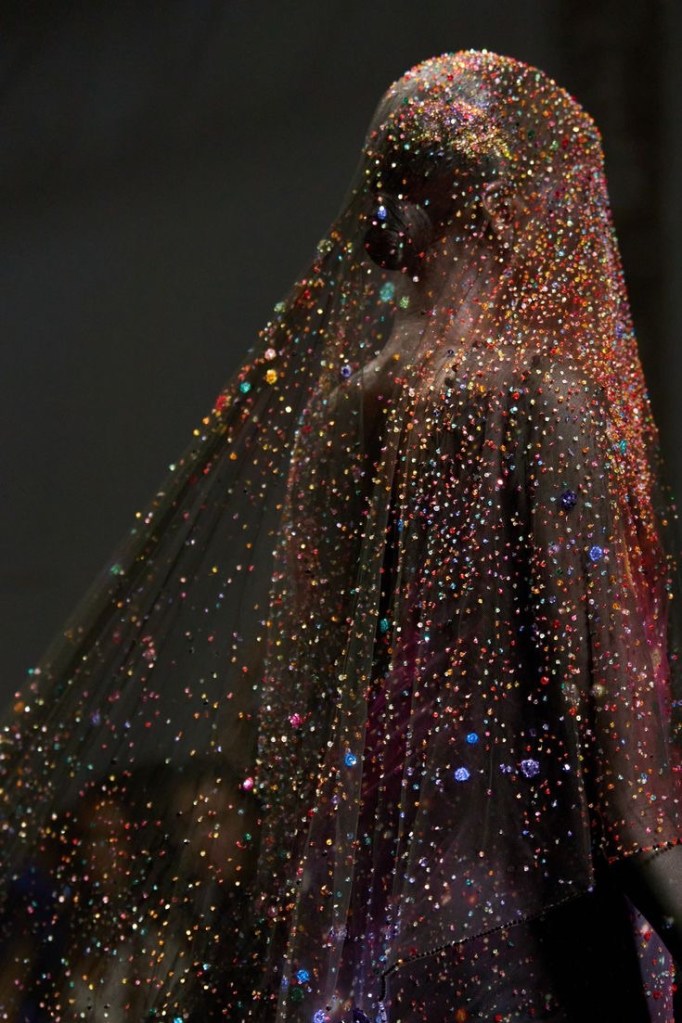
The skin was concretized by a multi-layered cocoon gown, made with six shades of skin tones plisse, a face molded velour hat and spiral cut boots made of printed leather. The flesh was a blood-red slender sheath covered in 68500 bugle beads that were sewn standing up as spikes. The dress was apparently so heavy (40 kilos) that it couldn’t be hung. A translucent sculptural harness with a helmet mask, worn with a wool-silk blend tailored jumpsuit, surmounted by a half-skeleton mannequin that dangled ominously at every step. The bones were “a reflection on the desire for immortality and the inevitable mortality”. And finally, a trailing veiled gown recalling the vision of a myriad of constellations closed the show. Embroidered with 97000 Swarovski crystals and a total of 1430 hours of hand work, the closing look was a recreation of the Milky Way. After stripping away the physical dimension of the body and tasting the paradoxical wonder of the fleetingness of the tangible dimension, Wun leads us toward the magic of spiritual abstraction, teaching one last lesson.
Everything is meant to perish, except for the soul. For it belongs to the universe and there it goes back.
 A fashion hypothesis
Leave a comment