The brand in analysis defines its business model through the expression “gracious growth and healthy profitability”, opening the discussion about what actually does it mean to grow consciously in a field that relies on anything to maximize profit.
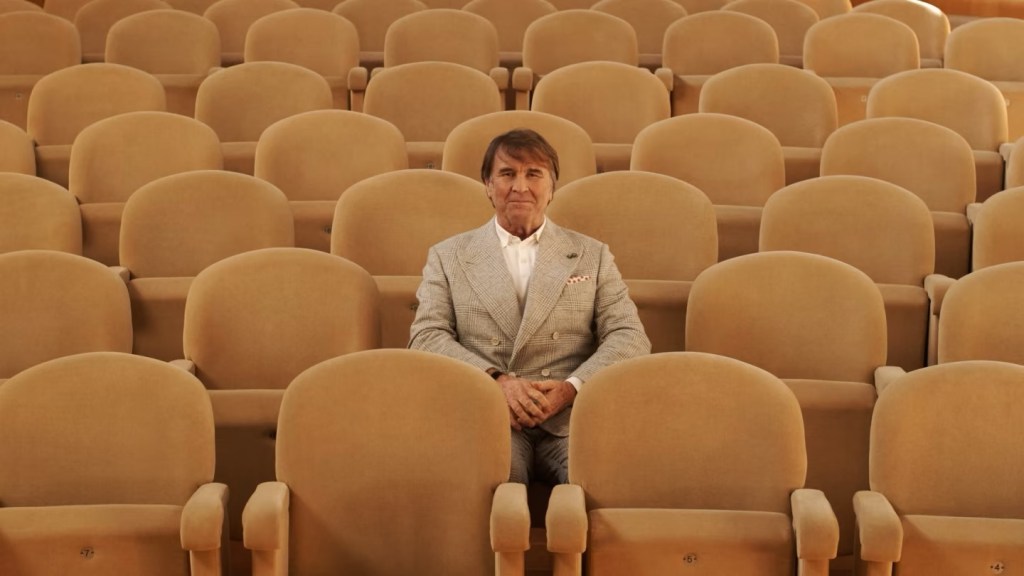
Brunello Cucinelli is an Italian luxury creative director and the chief executive of his eponymous made in Italy brand, a tangible example of the achievable connubium between sustainability and profit.
“In our idea of sustainability, the important environmental dimension coexists with three other fundamental dimensions: economic, moral and cultural” highlights the director.

From the largely discussed environmental point of view, “at the end of 2021 we decided to make our commitment measurable by communicating the goal of a 60 percent reduction in greenhouse emissions in terms of economic intensity by 2028, in absolute value of 70 percent for scope 1 and 2 emissions (direct and indirect), and 22.5 percent for scope 3 emissions (indirect generated by the value chain).”
Not only that, but one of Cucinelli’s more notorious projects has been the Solomeo factory in Corciano, Perugia. From the restoration of a small Umbrian village, the ideal workplace is born. In his “utopian” village we encounter a Forum of the Arts and a Theater, the Forest of Spirituality, as well as the School of Crafts to pass on high craftsmanship. All this for an idea, as simple to state as it is arduous to put into practice in the capitalist dynamics of our time: to contribute to the birth of a new system, which counts on human dignity and growth, both material and spiritual, as keystones. Recently, the factory has also been remodeled, without ever building new spaces. “We will maintain the same approach,” says the owner on the subject, “in the years to come and in the future development of our Fashion House, with the next expansions to take place exclusively around the village of Solomeo.”


From an economic point of view, the goal of “combining profit and gift in the best possible way” is often stressed by the company, with attention to both employees and suppliers. And the gift returns right to the enterprise, counting the very high turnovers and high loyalty of its customers. In fact, the brand’s consolidated income statement as at June 2023 (expressed in thousands of euros) testifies a revenue of 543,942 euros. You do the maths (it’s a large number).
“Moral sustainability,”states Cucinelli, “for us means working the right hours, as well as staying connected for the right amount of time, and we are convinced that the young and very young are and will be increasingly attentive to these aspects”. This last consideration seems to be strictly connected to the theme highlighted by the entrepreneur during G20, namely “strict compliance with laws, to which is linked, for instance, the duty to pay the right taxes in place in one’s own country”. The owner and designer allocates 20 percent of his company’s financial gain to his nonprofit foundation in the name of “human dignity” and pays his workers wages 20 percent higher than the industry standard, allowing his company to promote the continuation of the Italian craft tradition. Cucinelli also funds the Solomeo School of Trades, and the young students who attend it are free to work for his company or other firms. His employees work from 9 a.m. to 5:30 p.m. and do not have to give up their free time: there is a real ban on sending and receiving emails after that time.
He recounts that it was his personal experience that inspired his sensitivity to the topic.
“My father’s eyes glistened with tears. When we lived in the countryside the atmosphere, the environment, the life – everything was beautiful. We were simple farmers, nothing special. Then my father went to work in the factory. He was humiliated and reviled, his occupation was really backbreaking. He didn’t complain about the hardness of the job or the low wages he got from it, but he always said, “What harm have I done to God to be humiliated like this?”
He continues by saying that there is no way one of his workers should have to experience that same kind of treatment, as people need dignity more than anything else.
Finally, as for cultural sustainability, among the various initiatives of the Brunello and Federica Cucinelli foundation, the Universal Library under construction is a great example.

An interesting addition is the installation of the so called Epson PaperLab, the world’s first system for dry (without the use of water) recycling of paper in the office. Using this approach, companies can turn used paper into new paper in a single process through a circular solution that significantly reduces consumption. The label also implemented this procedure to assure that waste is reduced to zero.
This is significantly relevant since, with volumes continually increasing, office paper waste accounts for more than 50 percent of a company’s total waste. Naturally, this leads to increased carbon dioxide emissions. It is estimated that paper makes up more than a quarter of total waste in landfills and about 42 percent of the world’s forest timber harvest.
Moreover, discussing sustainability it is simply not possible to leave out the reversal of a circular business model at the expense of the classic linear model when approaching economy, considered as the best route to think of a more sustainable fashion industry. Over the recent years, the concept of circular economy has been widely adopted by businesses, governments, and academia. In spite of the (unfortunately) still highly spread “take, make, waste” rationale of the linear economy, circularity tries to decouple economic growth from the depletion of natural resources and environmental degradation. In this way, ideally, in a circular economy, there is no waste.
And so, considered all the initiatives proposed above, an additional aspect to take into account comes to be circularity. Being a luxury brand with high quality cashmere as its main product, the encouragement of the company to maintain the life cycle of the product for as long as possible seems to be an accessible approach.
“Why cashmere? Because it is a material that theoretically never gets thrown away. A cashmere pullover is never thrown away. The idea of producing something that lasts forever really appealed to me”.
Still, there is is not a reusing or recycling initiative provided directly by the producer, and the best option for a responsible consumer results in keeping the items with care and, when no longer needed, selling them on platforms such as Vestiaire Collective, a specialized site for buying luxury second-hand fashion products whose authenticity is guaranteed by experts. Second-hand shopping has, in fact, become progressively more relevant in the last few years and its impact is detectable, with apps such as Vinted being downloaded 29.1 million times in 2022.
Responsibility comes from each molecule of this complex organism that is production, and our duty as consumers stays the same: keeping a proactive approach when it comes to the way we buy and maintain. Contributing to that “Humanistic Capitalism” that Cucinelli so encourages.
 A fashion hypothesis
Leave a comment